Choosing the right boiler tank is a project decision, not a simple purchasing exercise. It affects safety, energy use, maintenance, shipping, and long-term reliability. The UNEP Global Status Report for Buildings and Construction 2023 estimates that buildings consumed about 34% of global energy and produced approximately 37% of energy and process-related carbon emissions in 2022. These figures strengthen the case for efficient heating equipment. They also show why tank selection deserves technical attention.
A suitable boiler tank must match the required capacity, operating pressure, water chemistry, fuel type, and local climate. Engineers should review thermal expansion, insulation thickness, corrosion protection, drainage points, and access for inspection. A tank designed for a humid coastal site may need different coatings from one installed in a dry, cold region. International projects also involve different compliance pathways. ASME BPVC Section VIII, EN 13445, and the EU Pressure Equipment Directive may influence design, testing, documentation, and certification. The International Energy Agency’s Energy Efficiency 2023 report also emphasizes the importance of reducing energy demand through better equipment and system performance.
However, no specification sheet predicts every site condition. Supplier data may use different test methods, and local water quality can change operating results. That gap matters. A reliable selection process combines manufacturer experience, independent inspection, code review, and realistic load calculations. The following guide examines these factors, while acknowledging an uncomfortable truth: the cheapest boiler tank can become the most expensive component when transport, installation, downtime, or maintenance is overlooked.
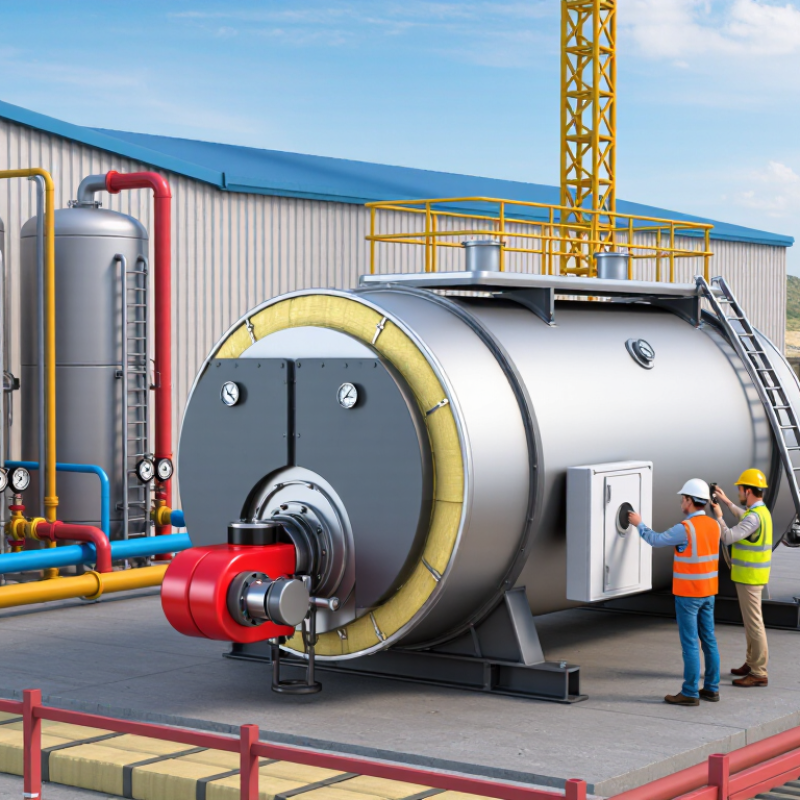
Choosing a boiler tank for a global project starts with defining the real job, not selecting a vessel from a catalog.
Record required steam output, working pressure, operating temperature, fuel type, and expected load changes. A tank serving a hospital may need stable performance during sudden demand peaks. A process plant may require continuous operation for long shifts.
Operating conditions can change sharply between countries. Check ambient temperature, altitude, humidity, water quality, and available fuel before approving the design. At a high-altitude site, reduced air density can affect combustion and capacity.
Hard water may increase scale, while poor treatment can damage internal surfaces. The specification should also identify start-up frequency, standby time, allowable pressure variation, and connection details.
Small details matter.
During project reviews, I have seen teams focus on maximum pressure while overlooking transport limits and local inspection access. That mistake can delay installation. Confirm the applicable safety codes, certification documents, inspection stages, and pressure-test requirements with qualified local engineers. Include practical clearances for maintenance, drainage, insulation, and emergency access. A generous safety margin is useful, but excessive capacity can increase cost and reduce efficiency during low-load operation. This is where careful review matters. A clean calculation may still miss an unusual operating pattern, so confirm assumptions with the people who will run the boiler every day.
How to Choose the Right Boiler Tank for Global Projects?
Tank selection starts with the boiler system, not the supplier’s catalogue. A steam boiler usually needs a feedwater tank, blowdown tank, or condensate receiver. Each type handles different temperatures, flow rates, and operating conditions. A feedwater tank may require deaeration, while a blowdown tank must safely manage flashing steam. That difference is easy to miss.
Carbon steel suits many standard installations because it offers strength and reasonable cost. Stainless steel performs better when water chemistry creates corrosion risks. The correct material depends on oxygen levels, chlorides, pH, temperature, and maintenance access. Internal coatings can help, but they are not a substitute for proper water treatment. Field inspections often reveal damaged coatings around nozzles and welds.
Pressure rating needs careful checking. Compare the tank’s design pressure and temperature with the boiler’s operating conditions. Include startup surges, thermal expansion, vacuum conditions, and relief valve settings. A tank rated for 10 bar at room temperature may have a lower allowable pressure when heated. Do not rely on working pressure alone. Codes and inspection rules vary by country, so qualified engineers should verify the design against local requirements and recognized pressure-vessel standards. I have seen project schedules assume identical specifications across regions. That shortcut creates delays. It can also force costly redesigns after fabrication. Keep room for inspection ports, drainage, insulation, and safe maintenance around the tank.
| Boiler Tank Type | Typical Application | Common Materials | Typical Design Pressure Range | Temperature Considerations | Main Advantages | Key Limitations | Global Project Suitability |
|---|---|---|---|---|---|---|---|
| Fire-Tube Boiler | Low- to medium-capacity steam or hot-water generation for commercial buildings, process plants, and general industry. |
|
Approximately 1–20 bar | Usually selected for saturated steam or hot-water service. The exact allowable temperature depends on design pressure, material grade, and code calculations. | Simple construction, comparatively low capital cost, easy operation, and good tolerance of moderate load changes. | Lower pressure and capacity ceiling than most water-tube designs; larger water volume can increase startup time and stored energy. | Suitable where local regulations permit the selected pressure range and where transport, installation space, and water-treatment systems are available. |
| Water-Tube Boiler | High-capacity steam generation for power generation, refineries, chemical plants, district energy, and heavy industry. |
|
Approximately 20–300+ bar | Appropriate for high-pressure and high-temperature steam when materials, weld procedures, tube design, and creep resistance are correctly specified. | High capacity, rapid steam generation, strong efficiency potential, and suitability for superheated steam. | Higher design, fabrication, inspection, water-treatment, and operator-qualification requirements. | Preferred for large international projects, but the pressure-vessel code, welding qualifications, inspection plan, and site utilities must be agreed before procurement. |
| Electric Boiler | Clean steam or hot-water production where electricity is available and on-site combustion emissions must be minimized. |
|
Commonly approximately 3–25 bar | High electrical input can produce rapid heating. Water quality and element-surface temperature must be controlled to limit scaling and overheating. | Very low local emissions, compact installation, high controllability, and no on-site fuel-storage system. | Operating cost depends strongly on electricity prices; electrical infrastructure may limit capacity; backup power may be required. | Useful in regions with reliable, economical electricity or renewable power. Confirm grid voltage, frequency, transformer capacity, and local electrical regulations. |
| Waste-Heat Recovery Boiler | Steam or hot-water generation from gas-turbine exhaust, furnace gas, incineration, cement, steel, and chemical processes. |
|
Approximately 10–120 bar, project-dependent | Must account for exhaust-gas temperature, thermal cycling, acid-dew-point corrosion, soot or ash deposition, and minimum gas-outlet temperature. | Reduces fuel consumption by recovering otherwise wasted heat and can improve overall plant efficiency. | Strongly dependent on the host process; fouling, corrosion, fluctuating gas conditions, and bypass requirements can complicate design. | Well suited to industrial projects with stable waste-heat sources. A complete gas analysis and operating profile are essential for international specification. |
| Thermal-Oil Boiler or Heater | Indirect heating for chemical processing, food production, asphalt, textiles, wood products, and other processes requiring stable high-temperature heat. |
|
Often approximately 3–10 bar in the circulating loop | Can provide liquid-phase heat at temperatures commonly up to about 300°C; some systems operate higher with specially selected fluids and materials. | High process temperature at relatively low system pressure, no boiling in normal operation, and precise indirect heat transfer. | Thermal-fluid degradation, leakage, fire risk, expansion-tank requirements, and fluid compatibility must be managed. | Suitable where high-temperature process heat is needed without high-pressure steam. Confirm thermal-fluid availability, fire codes, and environmental requirements in the destination country. |
| Hot-Water Boiler | Space heating, district heating, domestic hot-water systems, and low- or medium-temperature industrial heating. |
|
Typically approximately 2–25 bar | Common operating water temperatures are about 60–120°C; pressurized systems may operate at higher temperatures subject to code and system design. | Efficient heat distribution, no steam-condensate return system, and relatively straightforward temperature control. | Requires expansion control, corrosion protection, suitable water chemistry, and safeguards against overpressure and overheating. | Appropriate for building and district-energy projects. Check ambient-temperature design, freeze protection, water quality, and local pressure-equipment rules. |
Choosing a boiler tank for an international project starts with the installation country, not the catalog. Local codes define pressure ratings, materials, welding qualifications, inspection intervals, seismic design, and relief-valve discharge. In Europe, the Pressure Equipment Directive may apply. In the United States, ASME Boiler and Pressure Vessel Code requirements often govern design and fabrication. ISO 16528 offers an international framework, but it does not replace national approval.
Check the operating details carefully. Water-tube and shell boilers follow different requirements under EN 12952 and EN 12953. Fuel type, steam pressure, ambient temperature, feedwater chemistry, and altitude can change the correct specification. A tank designed for clean water may fail early when local water contains high chloride levels. Small details matter. Confirm material certificates, weld records, non-destructive testing, hydrostatic-test pressure, and safety-valve capacity. Require documents in the language accepted by the local authority.
Energy performance also deserves attention. The International Energy Agency reported in Energy Efficiency 2023 that buildings consumed about 30% of global final energy and produced around 26% of energy-related emissions. Efficient boilers can reduce operating costs, but efficiency claims need tested conditions. Do not compare figures from different standards without checking boundaries. A common mistake is treating international certification as universal approval. It is not. Local inspectors may still request design calculations, third-party witnessing, or site modifications. From project experience, the safest selection process leaves time for those requests, although schedules rarely allow enough.
Choosing the Right Boiler Tank for Global Projects
Energy efficiency should be measured under real operating conditions, not only by brochure ratings. A boiler tank may show excellent peak efficiency, yet lose performance when demand changes quickly. Review the expected load profile, fuel quality, ambient temperature, and operating schedule. Insulation thickness also matters in cold regions, where surface heat loss can quietly increase fuel use. Short cycling wastes energy. So does poor sizing.
Maintenance begins before the equipment leaves the factory. Confirm inspection access, drain locations, replacement-part availability, and technician requirements. Water quality deserves close attention. Hard water can create scale, while corrosive water may damage internal surfaces. A practical treatment plan can protect efficiency and extend service life. Remote sites need critical seals, gauges, and safety components stored locally. This detail is often missed. It should not be.
Total ownership cost includes purchase price, transport, installation, fuel, labor, water treatment, repairs, downtime, and eventual replacement. Compare these costs across the expected service period, perhaps ten to fifteen years. Use local energy prices and realistic maintenance wages. A low-cost tank may become expensive after repeated shutdowns. I have seen project estimates ignore technician travel, which distorted the final budget. Forecasts are never perfect. Leave contingency for fuel changes, delayed parts, and harsher weather than expected.
Comparison of representative boiler options using efficiency, annual maintenance effort, and estimated 10-year ownership cost.
Higher efficiency reduces fuel consumption, while lower maintenance hours can simplify operation in remote locations. The ownership-cost index is based on a standardized planning model covering purchase, installation, energy, routine maintenance, and replacement costs over 10 years; local fuel prices, climate, water quality, labor rates, and regulations should be evaluated before procurement.
Choosing the right boiler tank for a global project requires more than comparing price and volume. Start by checking the supplier’s actual production capability. Ask for welding procedure records, pressure-test reports, material certificates, and inspection photos. A capable supplier should explain how tanks perform in cold ports, humid sites, or high-altitude facilities. Factory visits or independent inspections can reveal details that polished brochures often miss.
Customization matters when standard dimensions do not fit your plant. Confirm nozzle positions, insulation thickness, operating pressure, heating method, surface treatment, and connection standards. Request approved drawings before fabrication begins. Delivery planning also deserves close attention. Clarify production milestones, packing methods, shipping documents, spare parts, and responsibility for transport damage. A small drawing change can delay a vessel by weeks. I have seen projects underestimate this risk.
Tips: Use a written technical checklist. Compare suppliers by evidence, not promises. Ask for a realistic schedule with buffer time. Confirm whether the supplier can support local installation and commissioning. After-sales service should include troubleshooting, remote guidance, maintenance instructions, and accessible replacement parts. Define response times before signing. One weak point remains common: buyers often focus on delivery and forget long-term support. That choice may seem efficient initially, but it can create expensive downtime later. Keep every technical agreement traceable.