

Search
What Are the 2026 Best Quick Connect Couplers?
Choosing the 2026 best Quick Connect Couplers requires more than comparing catalog prices. Real performance appears beside the excavator, compressor, or hydraulic power unit. Dust enters. Hoses bend. Operators connect equipment under pressure and limited visibility. A coupler must respond reliably in those ordinary, demanding moments.
Hydraulic systems specialist Brendan Casey states, “Reliability begins with controlling contamination.” That principle remains highly relevant for Quick Connect Couplers. A small grain of sand can damage sealing surfaces, increase leakage, or make disconnection difficult. The strongest designs therefore combine precise machining, durable seals, pressure compatibility, and protective caps. Flat-face couplers also deserve attention because they can reduce fluid loss during frequent attachment changes.
This guide examines the leading options expected to matter in 2026. It considers connection force, rated flow, pressure drop, corrosion resistance, temperature range, and maintenance requirements. ISO compatibility can simplify equipment changes, but it does not guarantee equal performance. That assumption fails.
Field experience matters, too. A coupler that performs well in a clean workshop may struggle on a muddy construction site. Likewise, a compact model may save space but restrict flow. The “best” choice depends on the machine, working environment, and replacement strategy. Some recommendations may remain debatable. Product testing, manufacturer documentation, and technician feedback should challenge every ranking. Readers should verify specifications before installation, especially when safety, pressure, and costly equipment are involved.
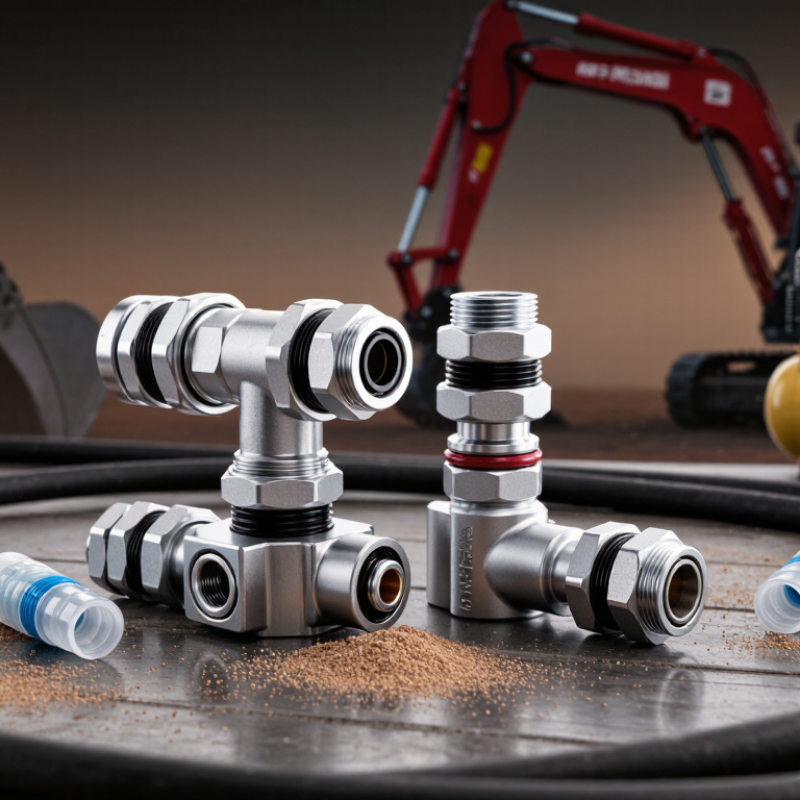
What Are Quick Connect Couplers and How Do They Work?
Quick connect couplers are fittings that join fluid lines without lengthy threading or special tools. They appear in hydraulic, pneumatic, water, and low-pressure fuel systems. Each coupler has two matching halves: a plug and a socket. Internal balls, sleeves, or poppet valves hold the connection securely.
When the plug enters the socket, the locking sleeve moves into position. A valve inside each half opens, allowing fluid or air to pass through. Disconnecting reverses the action. The valves close, reducing leakage and limiting contamination. During field work, I check the seal, wipe dust from the faces, and listen for a clear click. That sound helps, but it does not prove a safe connection. Pressure, temperature, thread type, flow demand, and fluid compatibility all matter when choosing the best 2026 coupler. A slightly oversized fitting may restrict flow. I have also seen clean-looking couplers fail because their seals had hardened.
Tips: Match the coupler with the hose size and working pressure. Confirm that its material suits the fluid and operating temperature. Release system pressure before disconnecting. Inspect O-rings for cuts, flattening, or swelling. Keep unused halves capped. Test the connection at low pressure first, then check for leaks with suitable eye protection. Follow the equipment manual for the final specification. Memory is not a reliable measuring tool.
What Are the 2026 Best Quick Connect Couplers? - What Are Quick Connect Couplers and How Do They Work?
| Coupler category | How it connects and works | Typical working pressure | Typical temperature range | Flow characteristics | Main advantages | Best-fit applications | Important limitations |
|---|---|---|---|---|---|---|---|
| Hydraulic poppet coupler | Sleeve or threaded connection mechanically opens spring-loaded poppets on both halves. The poppets close automatically when disconnected. | Approximately 210–350 bar (3,000–5,000 psi) | Approximately −20°C to 100°C (−4°F to 212°F), seal dependent | Moderate to high flow; some pressure drop is created by the poppet geometry. | Automatic shutoff, broad hydraulic compatibility, compact construction, and generally good availability. | Mobile hydraulics, agricultural equipment, construction attachments, and general hydraulic service lines. | Should not normally be connected or disconnected under pressure unless specifically designed for that duty. |
| Flat-face hydraulic coupler | A flat valve face seals before the internal valves open, then the mating sleeves engage the valves with minimal exposed cavity. | Approximately 250–420 bar (3,625–6,090 psi) | Approximately −25°C to 100°C (−13°F to 212°F), seal dependent | High flow with relatively low spill and reduced air entry when properly maintained. | Easy to clean, low fluid loss, low contamination risk, and suitable for demanding hydraulic circuits. | Excavator attachments, loaders, road equipment, forestry machines, and high-duty hydraulic tools. | Dirt on the mating faces can prevent full connection; alignment and cleanliness are critical. |
| Screw-to-connect hydraulic coupler | The halves are joined by rotating a threaded sleeve or body. The threaded mechanism resists separation under vibration and pressure. | Approximately 350–700 bar (5,000–10,150 psi), design dependent | Approximately −40°C to 120°C (−40°F to 248°F), seal dependent | High-pressure flow; pressure drop depends strongly on bore size and valve design. | Strong vibration resistance, reliable locking, and suitability for very high-pressure service. | Hydraulic test equipment, high-pressure jacks, industrial tooling, and severe-duty circuits. | Slower to operate than a sleeve coupler and generally unsuitable where frequent rapid changes are required. |
| Pneumatic sleeve coupler | A plug enters the socket and a spring-loaded sleeve locks it in place. Internal valves open when the plug reaches the seated position. | Approximately 7–16 bar (100–230 psi) | Approximately −20°C to 80°C (−4°F to 176°F), seal dependent | High air flow for its size; coupler profile and bore size determine pressure loss. | Fast one-handed operation, low weight, and convenient tool changes. | Air tools, assembly lines, workshops, packaging equipment, and compressed-air distribution. | Standard profiles are not universally interchangeable; accidental disconnection can cause hose whip. |
| Pneumatic safety coupler | A controlled-release sleeve vents downstream air before the plug is fully released, reducing stored-energy hazards. | Approximately 7–12 bar (100–175 psi) | Approximately −20°C to 80°C (−4°F to 176°F), seal dependent | Usually moderate to high flow, with a small additional pressure drop from the safety valve. | Reduces hose-whip risk, protects operators, and supports safer frequent tool changes. | Manufacturing cells, maintenance areas, automotive workshops, and high-use air-tool stations. | May have lower flow than an equivalent non-safety coupler and requires correct installation direction. |
| Dry-break fluid coupler | Special valve faces open only after the halves are sealed together, minimizing liquid leakage and vapor release during connection. | Approximately 10–40 bar (145–580 psi) | Approximately −40°C to 150°C (−40°F to 302°F), material dependent | Moderate flow; low spill performance may involve higher pressure drop than open-bore designs. | Very low leakage, reduced contamination, and improved operator and environmental protection. | Coolants, chemicals, fuels, laboratory systems, battery thermal management, and process fluids. | Must be matched carefully to fluid compatibility, vapor control requirements, and cleaning procedures. |
| Electrical or multi-line quick coupler | A single locking mechanism joins several pneumatic, hydraulic, electrical, or signal connections at the same time. | Fluid circuits typically 10–350 bar (145–5,000 psi); electrical rating is circuit dependent | Approximately −20°C to 80°C (−4°F to 176°F), material dependent | Combined flow depends on the smallest passage; electrical signal integrity depends on contact design. | Fast changeover, fewer loose connections, reduced assembly errors, and improved system organization. | Robotic tooling, modular test fixtures, injection-molding tools, and interchangeable machine attachments. | Higher initial cost, more complex maintenance, and limited interchangeability between different layouts. |
| Low-pressure garden or utility coupler | A push-in plug and spring-loaded socket create a simple shutoff connection for water or low-pressure utility lines. | Typically up to 10 bar (145 psi), application dependent | Approximately 0°C to 60°C (32°F to 140°F), material dependent | Moderate flow with comparatively low resistance in larger bore sizes. | Low cost, simple operation, and convenient hose or accessory replacement. | Water hoses, washdown systems, irrigation accessories, and light-duty utility equipment. | Not suitable for hydraulic pressure, compressed gas, hazardous chemicals, or high-temperature service. |