Top 10 Water Cooler Evaporator Options for Global Buyers
Choosing a Water Cooler Evaporator is no longer a simple price comparison. Buyers now examine cooling capacity, compressor efficiency, refrigerant type, noise, maintenance access, and water hygiene. A small evaporator can sit behind a stainless-steel panel, yet its performance affects energy bills every day.
The International Energy Agency’s report, The Future of Cooling, warns that cooling-related electricity demand could more than triple by 2050 without stronger efficiency measures. The U.S. EPA ENERGY STAR program also shows that certified water coolers can use substantially less energy than conventional models. These findings do not make every efficient-looking product a safe investment. Real conditions matter.
Dr. Moncef Krarti, a recognized building-energy and HVAC specialist, offers a practical principle: “Performance must be measured under real operating conditions, not inferred from a brochure.” That sentence deserves attention. A Water Cooler Evaporator may perform well in a laboratory, then struggle in a crowded office with frequent dispensing, warm inlet water, and poor ventilation.
This guide compares ten evaporator options for global buyers. It considers thermal output, materials, refrigerant compatibility, service life, and supplier transparency. Data from manufacturer sheets will be checked against recognized efficiency guidance, including ASHRAE practices where applicable. Some rankings may remain debatable. That is honest.
A perfect choice rarely exists. Regional voltage, climate, water quality, and after-sales support can change the result. Buyers should inspect those details before approving a purchase order.
What a Water Cooler Evaporator Does and Why It Matters
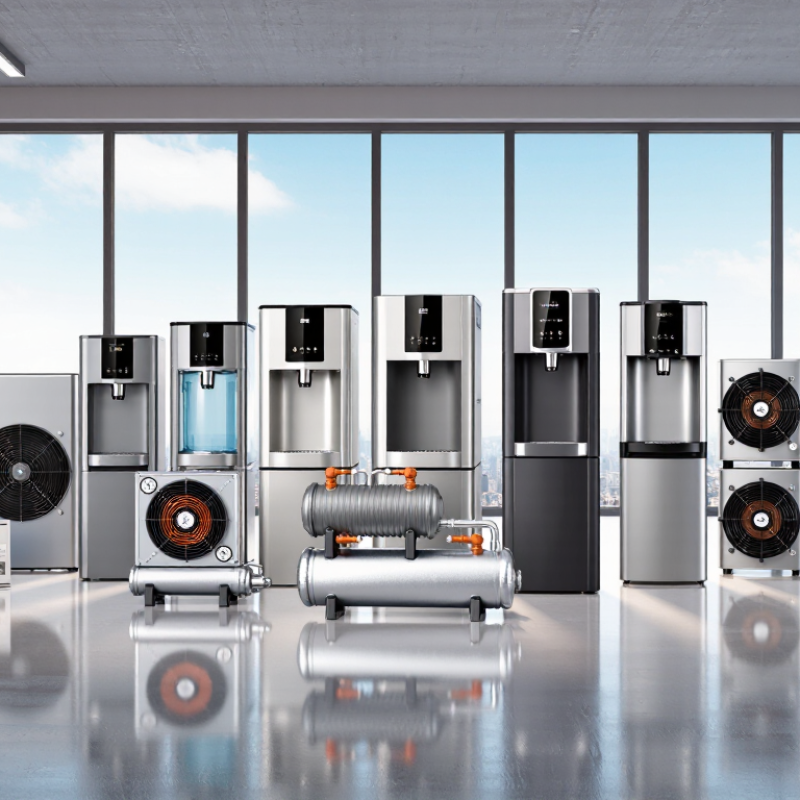
A water cooler evaporator is the heat exchanger where refrigerant absorbs heat from stored or flowing water. As the refrigerant changes from liquid to vapor, water temperature falls inside the tank or cooling circuit. Its surface area, tube layout, and refrigerant control directly affect cooling speed. A poorly matched evaporator may leave water lukewarm, especially after repeated dispensing.
The component matters because cooling demand is rising worldwide. The International Energy Agency reported in The Future of Cooling that space cooling could consume three times more electricity by 2050 without stronger efficiency measures. Although a drinking-water cooler is smaller, the same principle applies: efficient heat transfer reduces compressor running time. U.S. Department of Energy guidance also identifies evaporative cooling as a lower-energy option in suitable dry conditions, though water quality and humidity change the result.
The lesson is practical. Efficiency is not just a compressor rating.
For global buyers, compare cooling capacity, operating temperature range, refrigerant compatibility, corrosion resistance, and service access. Food-contact systems need suitable materials and cleanable surfaces. Field inspections often find blocked airflow, scale, or incorrect refrigerant charge before the evaporator is blamed. That assumption can be costly. Manufacturers should provide tested performance data, not only nominal capacity. A useful specification includes water inlet temperature, ambient temperature, pull-down time, and energy use. These details expose weak comparisons. Some published figures still look too optimistic. Verify them under realistic dispensing conditions.
The Main Evaporator Types Used in Water Cooler Systems
Water cooler evaporators are not interchangeable. The right type depends on cooling demand, water quality, service access, and available space. Global buyers commonly compare immersed coil, wrap-around coil, brazed plate, and shell-and-tube designs.
Immersed coil evaporators sit inside a chilled-water tank. Refrigerant flows through a copper or stainless-steel coil, cooling the surrounding water evenly. This design is simple, durable, and suitable for dispensers with storage tanks. However, scale can build up around the coil. Cleaning access must be planned carefully.
Wrap-around coils attach to the tank exterior and reduce direct contact with drinking water. They support easier hygiene control, but insulation quality becomes critical. Poor insulation wastes energy.
Brazed plate evaporators transfer heat through thin metal plates. They are compact and respond quickly when demand changes. Their narrow passages require clean water and correct filtration. Shell-and-tube evaporators offer stronger serviceability for larger systems, although they usually need more space and higher installation cost. They may suit commercial cooling stations better than small household units.
In real purchasing work, rated capacity can mislead. Actual performance changes with ambient temperature, refrigerant control, water flow, and maintenance habits. A smaller evaporator may perform better when its heat transfer surface stays clean. No single option wins. Careful testing still matters.
How Global Buyers Should Evaluate Capacity, Materials, and Efficiency
Top 10 Water Cooler Evaporator Options for Global Buyers
Global buyers should compare evaporator capacity under identical test conditions. A unit rated at 35°C ambient may perform poorly in a hot warehouse. Check water temperature, pull-down time, refrigerant charge, and recovery after repeated dispensing. Measure real demand. A 20-liter-per-hour rating means little without inlet-water temperature and duty-cycle details. The International Energy Agency reports that cooling demand could more than triple by 2050, increasing pressure on efficient equipment. Therefore, select capacity with seasonal demand, voltage variation, and local climate in mind.
Materials deserve equal attention. Copper tubes transfer heat effectively, while aluminum can reduce weight and cost. However, water-contact surfaces need corrosion resistance and documented hygiene suitability. Stainless steel is often practical, but weld quality and surface finishing still require inspection. Ask for material certificates, test records, and service-life assumptions. Efficiency should be judged through measured energy use, not marketing language. The United Nations Environment Programme states that refrigeration and air-conditioning already consume about 20% of global electricity. A small improvement matters at scale. Compare kWh per 24 hours, standby consumption, insulation thickness, and evaporator cycling controls. A neat spreadsheet can still mislead. Real-site testing may reveal noise, icing, or slow recovery. Not always. Temperature sensors also need calibration, especially where ambient conditions change sharply.
Key Standards, Sourcing Factors, and Maintenance Requirements
Top 10 Water Cooler Evaporator Options for Global Buyers
Choosing among ten evaporator options requires more than comparing cooling capacity. Buyers should verify refrigerant compatibility, operating pressure, heat-transfer material, and installation space. Copper-aluminum coils suit many compact systems, while stainless steel or coated surfaces may better resist moisture and corrosion. Thermoelectric assemblies can simplify small designs, but they often provide lower cooling output.
Standards deserve careful attention. Ask suppliers for pressure-test records, electrical safety reports, material declarations, and batch traceability. Applicable requirements may include relevant IEC 60335 provisions, ISO 5149 principles, and local rules for potable-water contact. Certification alone is not enough. Check whether the tested model matches the supplied evaporator, refrigerant, voltage, and intended climate. This step is often missed.
Sourcing decisions should include lead time, minimum order quantity, spare-part availability, and technical support. Request drawings with tube diameter, wall thickness, connection sizes, and rated conditions. During maintenance, inspect for refrigerant leaks, frost patterns, blocked airflow, drain blockage, and unusual compressor cycling. Clean condenser areas regularly, but avoid bending delicate fins. Water quality also matters; mineral deposits can reduce heat transfer and create hygiene concerns. Real installations are rarely perfect. A slightly oversized coil may improve reliability, yet it can increase cost and cabinet space. Field testing should confirm temperature recovery, noise, energy use, and performance after repeated cleaning cycles. Keep records. They reveal problems that memory usually hides.