
Choosing reliable Bulk Fibc Bag Suppliers can directly affect product safety, warehouse efficiency, and shipping costs. FIBC bags may look simple, yet their performance depends on fabric quality, stitching accuracy, lifting loops, and tested load capacity. A weak seam can fail under pressure. That risk deserves careful attention.
This 2026 guide reviews ten leading suppliers serving international markets. It considers manufacturing experience, quality systems, product customization, delivery capability, and customer support. We also examine practical details, including food-grade options, UN-certified designs, conductive fabrics, coated bags, and bags with discharge spouts. Certifications matter, but they should not replace independent verification. Buyers should request test reports, production samples, and clear specifications before placing large orders.
Supplier reputation is another important factor. A dependable company should explain its raw materials, inspection process, factory capacity, and complaint procedure without hiding behind vague promises. We have considered published information and common purchasing requirements, but this ranking is not perfect. Pricing and performance can change with resin costs, freight conditions, and regional demand. Some suppliers may also perform differently for small orders than for full container volumes.
Use this list as a practical starting point, not a final decision. Compare samples carefully. Ask difficult questions. The right partner should provide consistent bags, realistic lead times, and traceable quality documentation. In bulk packaging, reliability is built long before the bags reach your warehouse.
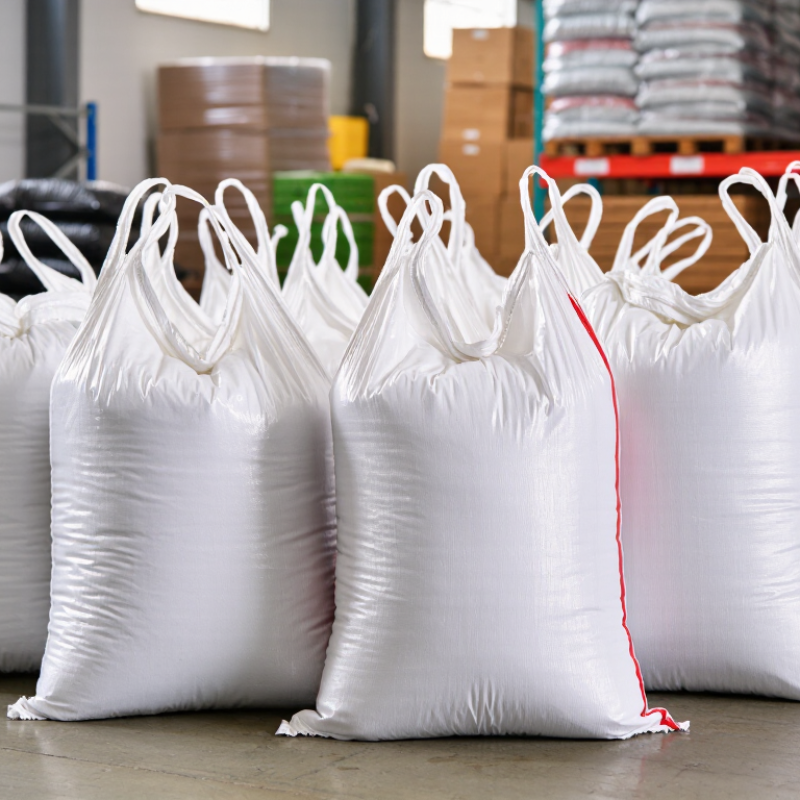
Bulk FIBC bags are large, flexible containers made from woven polypropylene fabric. They usually hold between 500 and 2,000 kilograms, depending on design and handling conditions. Strong lifting loops allow forklifts or cranes to move them safely. Filling and discharge openings also help control dust and material flow.
These bags are widely used for grains, seeds, animal feed, mineral powders, construction materials, and selected food ingredients. In warehouses, they reduce manual handling and use storage space efficiently.
A lined FIBC can protect moisture-sensitive products, while a breathable design may suit dry agricultural goods. Food-contact applications require suitable materials, clean production, and documented quality checks. Static-sensitive materials need properly designed bags and trained operators.
Choosing an FIBC is not just about capacity. Buyers should check the safe working load, fabric strength, seam quality, lifting design, liner fit, and discharge method. Outdoor storage may require UV protection and covered placement. A bag can look durable and still fail after poor loading, rough transport, or repeated use.
That detail is often underestimated. In practice, clear handling instructions matter as much as the fabric itself. Suppliers should provide test information, traceable production records, and guidance matched to the product. Even then, site conditions can expose weaknesses that laboratory testing does not show.
Choosing an FIBC supplier in 2026 requires more than comparing quoted prices. Grand View Research estimates the global FIBC market will expand steadily through 2030, driven by agriculture, chemicals, food, and construction. That growth attracts new factories, but capacity alone proves little. Request recent production records, factory photographs, and a traceable quality plan. Ask whether polypropylene tape, fabric weight, stitching, and liner materials remain consistent between batches.
Practical testing matters. Review certificates for tensile strength, seam strength, safe working load, and safety factor. For food-contact applications, verify migration testing and documented hygiene controls. For powders, inspect liner fit around the filling spout and discharge valve. A sample should survive handling, stacking, and a controlled drop test. The International Organization for Standardization’s ISO 21898 standard provides a useful reference for packaging performance and design. Do not accept a certificate without checking its scope and issue date.
Supplier reliability also appears in small details. Can the team explain batch coding within one call? Does it report nonconforming bags honestly? The 2024 Packaging Industry Report from Smithers highlights continuing pressure for traceability and material efficiency across industrial packaging. That pressure should shape your audit questions. Compare lead times using production calendars, not optimistic emails. An audit cannot predict every delay. I still prefer a supplier that admits limits over one promising everything. Check payment terms, corrective-action records, and backup production capacity before signing a long-term contract. Pricing is important. It is not the whole decision.
10 Best Bulk FIBC Bag Suppliers Worldwide in 2026
The global FIBC market continues to expand as industries seek safer, lighter, and more efficient bulk packaging. Grand View Research reports that the worldwide flexible intermediate bulk container market is projected to grow steadily through 2030, supported by chemicals, agriculture, food ingredients, and construction materials. Other industry reports, including Mordor Intelligence, also identify Asia-Pacific as a major production and consumption hub.
The top 10 bulk FIBC bag suppliers worldwide should not be judged by price alone. Strong suppliers provide traceable polypropylene fabric, consistent stitching, clean production areas, and documented load testing. A practical audit should review seam strength, fabric weight, safe working load, and packaging conditions. Ask for recent test records. Inspect sample bags with a real pallet or filling line.
Supplier performance can vary between factories, even within one group. That matters. A 2026 shortlist should include manufacturers from Asia, Europe, the Middle East, and the Americas. Regional production may reduce transport time and simplify communication. However, lower freight distance does not always mean lower total cost. Customs handling, rejected batches, and delayed certificates can quickly change the calculation. Some industry estimates place FIBC shipments in the millions of units annually, but market reporting methods differ. Rankings therefore need caution. The best supplier is the one that repeatedly delivers clean, durable bags with accurate documents and stable lead times.
Safe Working Load (SWL) is a key specification when comparing bulk FIBC suppliers. The chart presents common commercial load classes used for industrial, agricultural, chemical, food-grade, and construction applications. Actual capacity depends on bag design, filling method, lifting configuration, and certified testing.
When comparing the 10 best bulk FIBC bag suppliers worldwide in 2026, product fit should come before headline pricing. Buyers should check bag type, safe working load, safety factor, fabric weight, filling method, discharge design, and liner options. A construction-material distributor may need a coated, dust-resistant bag, while a food processor may require clean, traceable packaging. Details matter. Ask for technical drawings and production samples before approving a large order.
Certifications help, but they do not replace supplier experience. Review current test reports, factory quality procedures, material traceability, and inspection records. Depending on the cargo, relevant documentation may include food-contact compliance, ISO quality systems, or transport performance testing. Verify the certificate holder, scope, and expiration date. A logo on a brochure proves little. Request independent evidence when the application is sensitive.
Customization can improve handling, yet every extra feature affects cost and lead time. Common options include printed panels, corner loops, liners, sift-proof seams, and special inlet or outlet shapes. Compare quotations using the same specifications, minimum order quantity, tooling charges, delivery terms, and replacement policy. The lowest unit price may become expensive after freight, defects, or delayed production. No supplier is perfect. Even experienced teams can miss a small dimension change or underestimate seasonal demand. A pilot order, clear inspection plan, and written approval process reduce those risks. Pricing should be reviewed alongside consistency, communication, and the supplier’s ability to repeat the same quality across multiple shipments.
10 Best Bulk FIBC Bag Suppliers Worldwide in 2026
How to Choose the Right FIBC Bag Supplier for Your Needs
Choosing among the 10 best bulk FIBC bag suppliers worldwide in 2026 requires more than comparing prices. The right supplier should understand your material, filling method, discharge system, storage conditions, and shipping route. Ask for technical data, including safe working load, safety factor, fabric weight, liner design, seam construction, and dimensions. Request samples. A sample filled with your actual powder or granule can reveal dust leakage, poor discharge, or unstable lifting loops.
Reliable suppliers explain how fabric, thread, coatings, and liners are tested before production. Look for documented batch traceability, inspection records, calibrated testing equipment, and clear corrective-action procedures. For food, pharmaceutical, or chemical applications, request relevant declarations, migration data, cleanliness controls, and material compatibility evidence. Do not accept vague certificates. A responsive technical team matters when a bag arrives with a weak seam or an incorrect spout. Evaluate lead times realistically, including approval, testing, production, port handling, and customs clearance.
Cost still matters, but the cheapest bag may increase product loss, labor, and disposal expenses. Compare total performance over several shipments, not one successful trial. In my experience, supplier communication often predicts delivery reliability better than polished brochures. Still, judgment can be wrong. Keep a written specification and approve a retained sample before placing bulk orders. Review failures openly, even minor ones, and adjust the design or inspection plan. A dependable partner provides evidence instead of promises.
| Supplier Profile | Primary Supply Region | Typical FIBC Types | Safe Working Load | Common Sizes | Minimum Order Range | Typical Lead Time | Compliance Documents to Request | Best Fit |
|---|---|---|---|---|---|---|---|---|
| Supplier Profile 01 | East Asia | Standard 4-panel, U-panel, coated bags | 500–2,000 kg | 90 × 90 × 90 cm to 100 × 100 × 120 cm | 500–1,000 bags | 25–45 days after approval | Technical drawing, test certificate, fabric specification, loading test report | General industrial materials |
| Supplier Profile 02 | South Asia | U-panel, circular, ventilated bags | 500–1,500 kg | 90 × 90 × 100 cm to 105 × 105 × 130 cm | 300–800 bags | 30–50 days after approval | UV test, seam-strength report, dimensional inspection, factory audit record | Agricultural and dry-food packaging |
| Supplier Profile 03 | Southeast Asia | Food-grade, sift-proof, dust-controlled bags | 500–1,500 kg | 90 × 90 × 90 cm to 100 × 100 × 120 cm | 500–2,000 bags | 35–55 days after approval | Food-contact declaration, migration test, hygiene procedure, batch traceability | Flour, starch, grains, and powders |
| Supplier Profile 04 | Europe | UN-certified, conductive, hazardous-material bags | 500–2,000 kg | 90 × 90 × 100 cm to 110 × 110 × 130 cm | 100–500 bags | 40–70 days after approval | UN test certificate, electrostatic classification, grounding instructions, batch records | Chemicals and regulated materials |
| Supplier Profile 05 | Middle East | Heavy-duty, coated, UV-resistant bags | 1,000–2,000 kg | 95 × 95 × 100 cm to 110 × 110 × 140 cm | 300–1,000 bags | 30–60 days after approval | UV-resistance report, fabric GSM data, seam test, outdoor-storage recommendations | Minerals, aggregates, and outdoor storage |
| Supplier Profile 06 | North America | Custom-print, baffle, and form-stable bags | 500–1,500 kg | Custom sizes; common range 90–110 cm wide | 250–1,000 bags | 35–60 days after artwork approval | Artwork proof, dimensional report, print-ink declaration, sample approval | Retail-ready and space-efficient packaging |
| Supplier Profile 07 | Latin America | Standard, duffle-top, and discharge-bottom bags | 500–1,500 kg | 90 × 90 × 90 cm to 100 × 100 × 120 cm | 500–1,500 bags | 30–55 days after approval | Load test, closure inspection, discharge-valve drawing, packing list | Fertilizer, feed, and agricultural products |
| Supplier Profile 08 | Eastern Europe | Reconditioned, recycled-content, and reusable bags | 500–1,000 kg | 90 × 90 × 90 cm to 100 × 100 × 120 cm | 100–500 bags | 20–45 days after specification approval | Inspection grade, cleaning record, recycled-content statement, reuse limitations | Non-hazardous industrial materials |
| Supplier Profile 09 | Oceania | Ventilated, breathable, and moisture-control bags | 500–1,500 kg | 90 × 90 × 100 cm to 105 × 105 × 130 cm | 250–1,000 bags | 35–65 days after approval | Air-permeability data, moisture-control specification, UV test, loading procedure | Wood, agricultural, and moisture-sensitive goods |
| Supplier Profile 10 | Global export program | Multi-purpose custom FIBC systems | 500–2,000 kg | Standard or fully customized dimensions | 100–1,000 bags | 30–60 days after approval | Product specification, sample report, inspection plan, export packaging documents | Buyers requiring flexible international sourcing |
