Search

How to Choose the Right Structural Grating?

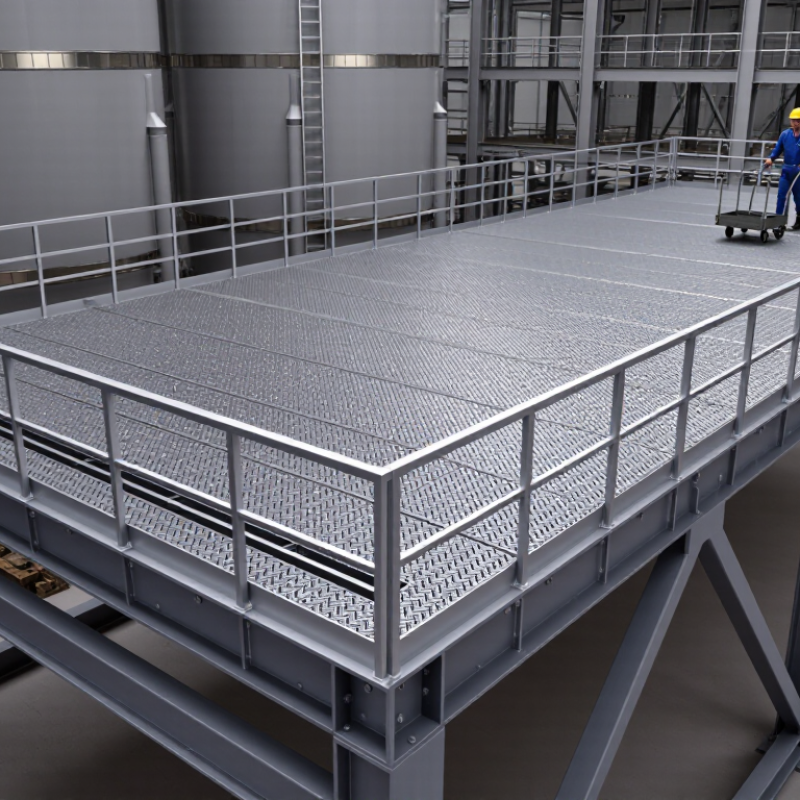
Choosing the right Structural Grating begins with the actual work environment, not a catalogue image. A platform beside a chemical tank faces different risks from a factory mezzanine or stormwater channel. Workers may carry tools, push carts, or stand beneath maintenance equipment. Each detail affects the required span, load capacity, surface pattern, and corrosion protection.

Reliable selection should follow recognized engineering guidance. The NAAMM Metal Bar Grating Manual explains how bearing-bar size, spacing, span, and loading influence grating performance. OSHA 29 CFR 1910.22 also requires walking-working surfaces to support their maximum intended load and remain clean, orderly, and sanitary. For industrial access systems, ISO 14122-2 addresses working platforms and walkways. These references do not replace a project-specific calculation. They create a safer starting point.

Material choice deserves equal attention. World Steel Association’s World Steel in Figures 2024 reports approximately 1.89 billion tonnes of crude steel production in 2023, showing steel’s continuing industrial importance. However, availability does not guarantee suitability. Galvanized steel may serve a general outdoor walkway, while stainless steel can better resist moisture, chemicals, and repeated washing. That choice can become expensive if the environment is underestimated.

Small details matter. A wet shoe on a smooth surface can change the safety outcome. Drainage, opening size, edge treatment, handrail compatibility, and inspection access should be reviewed together. No selection method is perfect. Assumptions sometimes fail in service. A competent engineer should verify loads, deflection, supports, and local code requirements before specifying the final Structural Grating.

How to Choose the Right Structural Grating?

Understanding Structural Grating Types and Their Main Functions

How to Choose the Right Structural Grating?

Understanding Structural Grating Types and Their Main Functions

Structural grating supports people, equipment, and drainage while allowing light and air to pass through. Its type determines safety, weight, maintenance, and service life. Bar grating uses load-bearing bars and suits walkways, platforms, stairs, and trench covers. Welded joints provide strength, while press-locked designs offer a cleaner appearance. A small detail matters: bar spacing must prevent objects or footwear from slipping through.

Molded fiberglass grating performs well in wet or chemically aggressive areas. It resists corrosion and needs little coating maintenance. Aluminum grating reduces dead load and works well where handling or installation access is limited. Steel grating usually provides higher strength for heavy industrial platforms, but its protective finish must match the environment. A coating that works indoors may fail quickly near saltwater.

Surface choice also affects daily safety. Smooth bars are suitable for dry interiors, while serrated bars improve traction around oil, rain, mud, or process liquids. I would not select grating by load rating alone. Check span, support spacing, concentrated loads, deflection limits, and local safety requirements. Field measurements can reveal uneven supports that drawings miss. That is where many assumptions fail. The most attractive pattern may be the wrong practical choice. Review drainage, lifting access, fasteners, and inspection needs with a qualified engineer before fabrication.

How to Choose the Right Structural Grating?

Understanding structural grating types and their main functions

How to read the chart: The ranges show typical commercial bearing-bar depths used for structural grating. Welded and riveted steel grating are commonly selected for heavy-duty platforms, walkways, stairs, and maintenance areas. Press-locked grating is often used where a clean appearance and close bar spacing are preferred. Swage-locked aluminum grating is suitable when low weight and corrosion resistance are important.

Final selection should be based on span, design load, deflection limits, opening size, environment, material, and the applicable load tables or structural standard.

Assessing Load, Span, and Environmental Requirements

Choosing structural grating starts with the load, not the opening pattern. Identify dead load, live load, wheel loads, impact, and maintenance equipment. ASCE 7-22 separates imposed loads from environmental actions, supporting disciplined preliminary checks. A 4.8 kPa, or 100 psf, live-load benchmark is often used for pedestrian areas. However, project criteria must control. Short spans matter. Concentrated loads can govern. A 1,000-kilogram cart on four small wheels may create harsher local effects than evenly distributed foot traffic.

Span and bearing conditions deserve measured attention. Use verified load tables only after confirming bar size, spacing, panel orientation, and support width. NAAMM MBG 531-19 addresses deflection, vibration, and connection behavior, not strength alone. A span-to-240 deflection limit is a useful screening value for walking surfaces, but specifications may require more control.

Check the edges. A panel can satisfy strength calculations yet feel springy or trap wheels when deflection is ignored. Uneven supports can also twist panels and reduce bearing contact.

Environment changes the selection. The NACE IMPACT study estimated global corrosion costs near US$2.5 trillion annually, about 3.4% of global GDP. Chlorides, standing water, fertilizer dust, and chemical washdown accelerate deterioration. Match material, coating, fasteners, and drainage to exposure. Inspect crevices and cut ends. “Corrosion resistant” is not permanent. That phrase needs a real exposure definition. Before ordering, document the design load, clear span, support details, temperature range, and maintenance access. One uncomfortable question remains: are the assumed loads measured, or merely copied from an old drawing?

Comparing Materials, Surface Treatments, and Safety Features

Choosing the right structural grating begins with the working environment, not the catalog photo. Steel offers high load capacity for platforms, stairs, and service areas. Aluminum is lighter and resists corrosion in many outdoor settings. Fiberglass-reinforced plastic performs well around moisture and some chemicals. I have found that weight matters during installation, especially when workers position panels above equipment.

Surface treatment changes long-term performance. Galvanized steel provides a protective zinc layer, while powder coating adds color and another barrier. Smooth coatings may look cleaner, but they can reduce traction when oil, rain, or mud is present. Serrated surfaces improve grip underfoot. They can also collect debris and make cleaning slower. That trade-off is easy to overlook.

Safety details deserve measurements, not assumptions. Check load ratings, span direction, opening size, edge support, and fastener compatibility. A close-mesh panel can reduce dropped-object risks on elevated walkways. High-visibility markings may help near vehicle routes or dim maintenance areas. Inspect welds, clips, and damaged coatings after installation. No material remains perfect. A corrosion-resistant choice may still fail when cut edges are left unprotected. I would also question whether the planned cleaning method suits the surface. The safest specification is the one workers can understand, inspect, and maintain without guesswork.

Selecting Grating Dimensions, Openings, and Support Configurations

How to Choose the Right Structural Grating?

Selecting grating dimensions starts with the actual load, not the visual appearance. Measure spans, support spacing, live loads, and maintenance equipment. NAAMM MBG 531-23 emphasizes verifying bearing bars, span direction, and load tables before fabrication. A grating panel may look rigid, yet a small support change can increase deflection significantly. Keep walking surfaces firm.

Opening size affects safety, drainage, cleaning, and comfort. OSHA 1910.23 limits openings on many elevated walking surfaces to four inches. Smaller openings may suit areas below, where tools, heels, or debris could fall. The Bureau of Labor Statistics recorded 865 fatal occupational injuries involving falls, slips, and trips in 2022. That figure supports careful surface selection, especially around wet process zones and access platforms.

Support configuration deserves equal attention. Use continuous bearing where panels may shift, and provide positive fixing near vibration sources. Check clips, seats, edge angles, and removable sections together. A 1.5-inch bearing seat can be inadequate when installation tolerances are poor. Field experience often reveals this late. I would recheck every unsupported edge, because a clean drawing can still hide a dangerous gap. Consider corrosion allowance, thermal movement, and future maintenance loads before approving dimensions.

Verifying Standards, Installation Needs, and Long-Term Maintenance

Choosing structural grating starts with evidence, not appearance. Ask for material certificates, load tables, slip-resistance data, and documented test methods. Verify each claim against applicable building, workplace, and corrosion standards. Requirements vary by region and project risk. A licensed engineer should confirm span, deflection, point loads, and support details. Small gaps matter.

On site, measure actual support spacing before ordering panels. Check access routes, lifting limits, drainage, and available cutting tools. A grating that fits the drawing may fail during installation if workers cannot align or secure it safely. I have seen rushed measurements create awkward field cuts and exposed edges. That mistake was preventable. Use templates around pipes, corners, and removable covers. Confirm fasteners suit the base material and expected vibration.

Long-term maintenance deserves equal attention. Select finishes and materials for moisture, chemicals, temperature changes, and cleaning practices. Schedule inspections for loose clips, damaged bearing bars, rust staining, and blocked drainage. Record findings with dates and photographs. Replace damaged sections promptly, using components with matching strength and corrosion performance. Do not rely on appearance alone. A clean surface can hide thinning beneath paint or deposits. Review the maintenance plan with the facility team before handover. One detail is often missed: future access. If panels cannot be lifted without special equipment, routine inspection may be postponed. That weakens reliability over time.

How to Choose the Right Structural Grating? - Verifying Standards, Installation Needs, and Long-Term Maintenance

Use this selection table as a practical screening guide. Final dimensions, load ratings, connections, fire requirements, and corrosion protection should be confirmed by the responsible engineer and the applicable local code.

Selection Dimension Recommended Check Typical Options or Reference Values Why It Matters Verification and Maintenance Action
Intended Use Identify whether the grating is for a walkway, platform, stair tread, trench cover, equipment access area, or vehicle-access zone. Walkways Platforms Stairs Drainage Covers Different uses create different requirements for load, deflection, opening size, impact resistance, and access safety. Record the use, expected traffic, equipment loads, and access restrictions in the design documents before selecting a panel type.
Design Load Determine uniform live load, concentrated load, dead load, impact, and any moving or rolling load. Common building design values may include a 4.8 kPa (100 psf) uniform live load for some occupied floors or walkways, but the governing code and project use control. A panel that meets a uniform-load value may still fail under a concentrated wheel, foot, or equipment load. Check manufacturer load tables or perform an engineering calculation for the actual clear span and load position. Inspect for permanent deformation after unusual loading.
Clear Span and Support Measure the unsupported span, bearing width, support direction, and support elevation. Panels are commonly supported on two opposite sides; bearing length is often specified by the engineer or project standard rather than assumed. Span is a primary factor in bending stress and deflection. Incorrect bearing or orientation can substantially reduce capacity. Confirm that support members are level, aligned, and strong enough. Do not cut, notch, or rotate load-bearing panels without engineering approval.
Bar Spacing and Openings Select bearing-bar spacing and cross-bar spacing based on foot safety, tools, drainage, ventilation, and local code. Typical industrial spacing may be 19, может 30, or 40 mm bearing-bar centers, with cross-bar spacing commonly around 100 mm; project requirements may differ. Smaller openings improve pedestrian safety and reduce the risk of dropped objects, while larger openings may improve drainage and reduce weight. Verify opening dimensions against the applicable building, workplace-safety, accessibility, and dropped-object requirements. Keep openings free of debris.
Material Selection Match the base material to strength, temperature, chemical exposure, electrical conditions, and maintenance expectations. Carbon Steel Stainless Steel Aluminum Carbon steel provides high structural capacity; stainless steel supports demanding corrosive environments; aluminum reduces weight but has different strength and deflection characteristics. Confirm alloy, temper, weldability, and compatibility with adjacent metals. Avoid direct contact between dissimilar metals where galvanic corrosion is possible.
Applicable Standards Identify the standards used for design, fabrication, material, coating, welding, and installation. Common references include ANSI/NAAMM MBG 531 for metal bar grating, ASTM A36 or ASTM A572 for certain carbon-steel products, ASTM A123 for hot-dip galvanized fabricated steel, and ASTM A780 for repairing damaged galvanized coatings. Standards define terminology, tolerances, material properties, coating practices, and repair methods. They do not replace project-specific structural calculations. Request material certificates, coating records, fabrication details, and installation instructions. Confirm the edition and jurisdictional acceptance of each standard.
Surface Finish Choose a plain, serrated, galvanized, painted, or specialized corrosion-resistant finish. Plain Surface Serrated Surface Hot-Dip Galvanized Painted Serrated surfaces can improve slip resistance in wet or oily conditions. Coatings protect carbon steel but can wear at traffic points and cut edges. Specify the required slip-resistance level and test method where applicable. Repair damaged galvanized areas using an accepted zinc-rich repair procedure.
Wet and Corrosive Exposure Assess humidity, standing water, salt, chemicals, wash-down practices, soil contact, and atmospheric pollution. Use drainage-friendly layouts, suitable galvanizing or stainless steel, and corrosion allowances where appropriate. Chemical compatibility must be checked individually. Corrosion reduces cross-sectional area, weakens connections, creates sharp edges, and can eventually compromise load capacity. Provide drainage and ventilation, eliminate water traps, and inspect regularly for rust, coating loss, pitting, and corrosion around fasteners and welds.
Slip Resistance Evaluate footwear, liquids, oils, ice, mud, slope, and cleaning conditions. Serrated bearing bars are commonly selected for improved traction in wet or contaminated areas; they are not a substitute for a complete fall-prevention design. Slip risk depends on the surface, contaminant, footwear, walking direction, slope, and housekeeping—not only on the grating profile. Use drainage, adequate lighting, handrails, toe boards, and routine cleaning. Replace severely worn or smoothened surfaces where required.
Panel Size and Handling Balance panel dimensions with lifting access, installation space, transportation, and available labor or equipment. Smaller modular panels simplify manual handling; larger panels reduce the number of joints but may require mechanical lifting. Panels that are too heavy or large can create handling hazards and may be damaged during installation. Confirm lifting points and temporary supports. Use safe lifting practices and never stand beneath a suspended panel.
Connections and Fasteners Specify clips, saddle clamps, bolted connections, welds, or other approved restraints. Connection design should account for uplift, vibration, thermal movement, lateral movement, and removal requirements. Properly sized and placed connections prevent shifting, rattling, uplift, and progressive movement under traffic or vibration. Install the specified number and type of fasteners. Check torque where applicable and inspect loose, missing, corroded, or damaged hardware.
Stair Treads Check tread depth, width, nosing, slip resistance, attachment, and openings. Stair geometry must comply with the applicable building and workplace-safety code; tread requirements are not determined by grating alone. Unsafe rise-and-run dimensions, inadequate nosing, or excessive openings can cause trips and falls even when the grating is structurally adequate. Verify uniformity of all treads, secure every tread, maintain visible edges where required, and replace distorted or loose treads promptly.
Cutouts and Penetrations Coordinate openings for pipes, ducts, cables, columns, drains, and equipment bases before fabrication. Large or irregular cutouts may require reinforced edges, additional support, trim angles, or a revised panel layout. Unreinforced cutouts can interrupt load paths and create sharp edges or excessive unsupported spans. Approve field modifications before cutting. Protect exposed edges, remove burrs, and restore corrosion protection after modification.
Deflection and Serviceability Set an allowable deflection limit appropriate to pedestrian comfort, equipment operation, drainage, and appearance. Many projects use serviceability limits such as span/240 or span/360, but the controlling limit must come from the design criteria or applicable code. Excessive deflection may cause uncomfortable walking, ponding, vibration, equipment misalignment, or damage to finishes. Verify the selected span/load combination using engineering calculations. Investigate noticeable bounce, sagging, or vibration before continued use.
Installation Tolerances Confirm level, alignment, bearing, panel gaps, support contact, and transitions to adjacent surfaces. Use the project specification or approved fabrication drawings for exact tolerances; avoid relying on visual fit alone. Uneven panels and excessive gaps increase trip, wheel, tool-drop, and vibration risks. Complete an installation inspection before opening the area to traffic. Correct rocking panels, unsupported corners, protruding fasteners, and unsafe gaps.
Routine Inspection Establish inspection frequency based on traffic, exposure, criticality, and regulatory requirements. Inspect before initial use, after severe weather or impact, and at periodic intervals appropriate to the environment; high-risk areas may require more frequent checks. Early detection of corrosion, cracks, distortion, and loose connections reduces the chance of unexpected failure. Document panel identification, condition, defects, photographs, corrective actions, and inspection dates. Restrict access when structural integrity is uncertain.
Cleaning and Drainage Remove debris, oil, ice, sediment, and materials that block drainage or conceal defects. Use cleaning methods compatible with the grating material and coating; avoid chemicals that attack the base metal or protective finish. Blocked openings create standing water, increase slip risk, accelerate corrosion, and add unintended dead load. Clean high-traffic and wet areas on a defined schedule. Keep drains and channels open and verify that wash water does not collect below the panels.
Replacement Criteria Define when a panel, bearing bar, cross bar, fastener, or support must be repaired or replaced. Replacement is generally warranted for critical section loss, cracked welds, severe deformation, unsafe openings, failed connections, or unresolved instability. Cosmetic coating damage may be repairable, while loss of structural section or permanent distortion can require engineering evaluation or replacement. Tag and isolate defective areas. Have a qualified person assess damage and approve repair, reinforcement, or replacement before reuse.

Important: Load ratings, allowable spans, opening limits, coating thickness, slip resistance, stair geometry, and inspection intervals must be confirmed against the project specifications, applicable building and workplace-safety regulations, and the responsible engineer’s calculations.