

Search
China Top 10 Stainless Steel Water Tank Suppliers?
Choosing the right stainless steel water tank supplier affects hygiene, durability, installation time, and long-term operating costs. This guide introduces China’s top 10 suppliers of Ss Steel Water Tanks, focusing on practical evidence rather than attractive claims. Each company is considered through product quality, manufacturing experience, technical support, customization, certifications, and export performance.
The review looks at details buyers can verify. These include stainless steel grades, welding quality, panel thickness, insulation options, leakage testing, and production capacity. A dependable supplier should explain whether it uses 304 or 316 stainless steel, especially for coastal sites or water with higher chloride levels. Factory photographs, inspection records, project references, and clear warranty terms also matter. Small details often reveal real expertise.
No supplier fits every project. A company experienced in municipal storage may not understand a small hotel installation. Another supplier may offer lower prices but weaker after-sales support. That difference can become expensive when a tank arrives damaged or site dimensions change. This article therefore avoids treating “top” as an absolute label. Rankings may shift with project size, budget, location, and technical requirements. Some information may also require direct confirmation, because websites can become outdated. Buyers should request current documents and sample specifications before placing an order. Keep checking the details. The following supplier overview offers a practical starting point for comparing Chinese manufacturers with greater confidence, while recognizing that careful judgment remains essential.
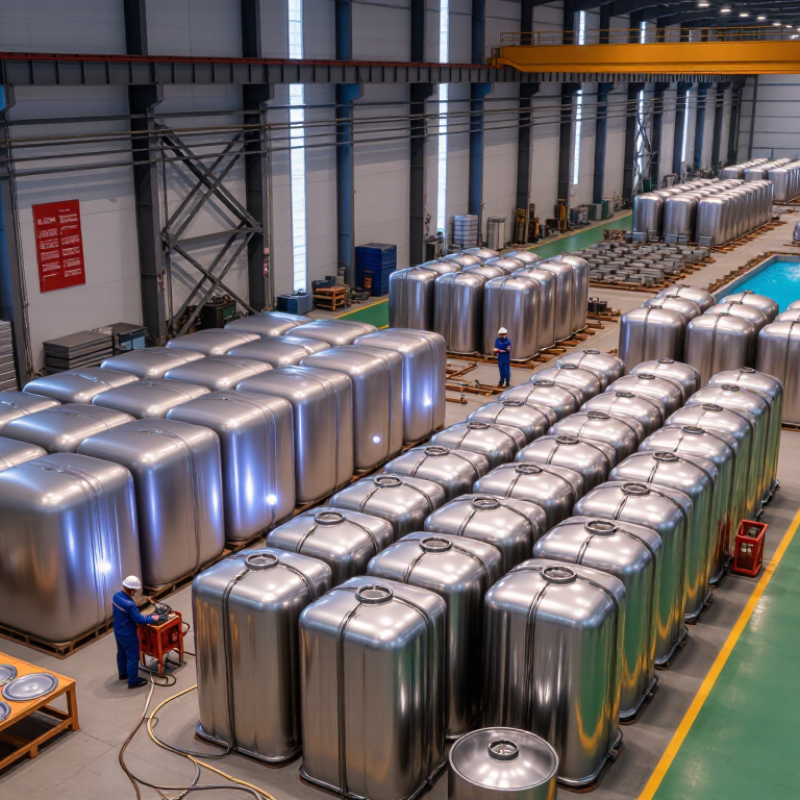
Stainless Steel Water Tank Types, Capacities, and China’s Top 10 Suppliers
China’s top 10 stainless steel water tank suppliers should be assessed by tank design, fabrication control, and after-sales support. Common types include sectional panel tanks, horizontal tanks, vertical cylindrical tanks, and insulated tanks. Sectional tanks suit rooftops and narrow plant rooms. Vertical tanks often support larger storage volumes. Insulated models help protect temperature-sensitive water.
Available capacities usually range from 1,000 liters to over 5,000,000 liters. Actual capacity depends on panel size, reinforcement, water pressure, and installation height. A supplier’s catalog is only a starting point. Ask for engineering drawings, material certificates, weld inspection records, and passivation details. SUS 304 works for many general applications, while SUS 316 is safer in coastal or chemically aggressive environments. The choice still requires water analysis.
When comparing China’s leading ten suppliers, examine factory experience, production equipment, customization ability, and project references. Reliable manufacturers explain cleaning procedures, foundation requirements, access openings, ladders, valves, and internal supports clearly. They should also identify applicable standards and provide inspection documents before shipment. Some advertised capacities appear impressive, yet usable volume may be lower after fittings and safety clearance. That detail is easy to miss. Supplier rankings can change with quality consistency, delivery performance, and technical service. A factory visit or independent inspection may reveal more than polished photographs.、】【
China Top 10 Stainless Steel Water Tank Suppliers? - Stainless Steel Water Tank Types, Capacities, and China’s Top 10 Suppliers
| No. | Supplier Evaluation Dimension | Relevant Stainless Steel Water Tank Type | Typical Capacity or Range | Common Material and Construction | Recommended Application | Key Purchasing Check |
|---|---|---|---|---|---|---|
| 1 | Small-volume customization | Vertical cylindrical welded tank | 100–5,000 L | 304 stainless steel; welded shell with sanitary fittings | Homes, restaurants, laboratories, and small commercial buildings | Confirm wall thickness, nozzle locations, access opening, and finished weld quality |
| 2 | Modular panel-tank capability | Pressed-panel assembled tank | 5–5,000 m³ | 304 or 316 stainless steel panels with bolted or welded joints | Apartment complexes, factories, schools, and municipal facilities | Check panel dimensions, joint sealing method, internal bracing, and site assembly requirements |
| 3 | Large-capacity engineering projects | Sectional stainless steel water tank | 100–10,000 m³ or project-specific | Heavy-gauge stainless steel panels with structural reinforcement | Industrial plants, hospitals, data centers, and public infrastructure | Request structural calculations, seismic design data, foundation loads, and installation drawings |
| 4 | Potable-water compliance | Hygienic drinking-water storage tank | 500–5,000,000 L | Food-contact-grade 304 or 316 stainless steel; smooth internal surface | Drinking-water systems, food processing, and healthcare facilities | Verify applicable potable-water certificates, material traceability, cleaning access, and drainage design |
| 5 | Corrosion-resistance selection | 316 stainless steel tank | 1–2,000 m³ | 316/316L stainless steel containing molybdenum for improved chloride resistance | Coastal areas, chemical environments, and higher-purity water systems | Compare water chemistry, chloride concentration, weld treatment, and passivation procedures |
| 6 | Hot-water and thermal-service capability | Insulated stainless steel storage tank | 300–100,000 L | 304/316 stainless steel with polyurethane or mineral-wool insulation | Domestic hot water, solar thermal systems, and process-water storage | Check operating temperature, insulation thickness, pressure rating, and thermal expansion provisions |
| 7 | Pressurized-system integration | Stainless steel pressure water tank | 50–10,000 L; project-specific pressure ratings | Pressure-rated stainless steel vessel with flanged connections | Booster systems, hydropneumatic systems, and industrial water distribution | Confirm design pressure, test pressure, safety valve arrangement, and applicable pressure-vessel rules |
| 8 | Fire-water storage experience | Stainless steel fire-water tank | 10–1,000 m³ | Reinforced 304 stainless steel panels with dedicated fire-system connections | Fire sprinkler systems, warehouses, commercial buildings, and industrial sites | Check required fire reserve volume, suction connections, overflow, level monitoring, and local code compliance |
| 9 | Export and documentation capability | Containerized or knock-down modular tank | 10–5,000 m³ | Flat-pack panels, stainless steel accessories, and export packaging | Overseas construction projects and sites with restricted access | Request packing lists, drawings, installation manuals, material certificates, and spare-parts schedules |
| 10 | After-sales and installation support | Custom-engineered stainless steel tank system | Capacity based on site demand and design conditions | 304 or 316 stainless steel with optional ladders, platforms, vents, valves, and level sensors | Complex commercial, municipal, and industrial water projects | Evaluate engineering response time, commissioning support, warranty terms, and replacement-component availability |