Choosing a tank fabrication partner is rarely as simple as comparing prices online. Global buyers must evaluate engineering depth, material traceability, welding quality, inspection records, and delivery reliability. A polished website proves very little. Factory evidence matters more.
This guide introduces 10 leading tank fabrication companies serving international customers. The selection considers practical factors, including pressure or storage requirements, stainless steel and carbon steel capabilities, surface treatment, dimensional accuracy, and export experience. It also considers how suppliers manage drawings, approvals, factory acceptance tests, packaging, and installation support.
Details matter.
A tank may look perfect in photographs yet fail to match site conditions, connection sizes, or local compliance requirements. Buyers should confirm applicable standards, documentation, testing methods, and warranty terms before signing a contract. Independent inspections can add cost, but they may expose problems early, especially around weld consistency or coating thickness.
No ranking can suit every project. A chemical processor may value corrosion resistance, while a food manufacturer may prioritize hygienic polishing and cleanability. A contractor may care more about production capacity, transport planning, and schedule control. Even experienced buyers can overlook spare parts or after-sales response.
The companies featured here are presented through a practical, evidence-focused lens. Their capabilities can change, and supplier claims still require verification. Treat this list as a starting point for technical discussions, site audits, and carefully documented quotations. Reliable results come from matching proven manufacturing experience with clearly defined project requirements.
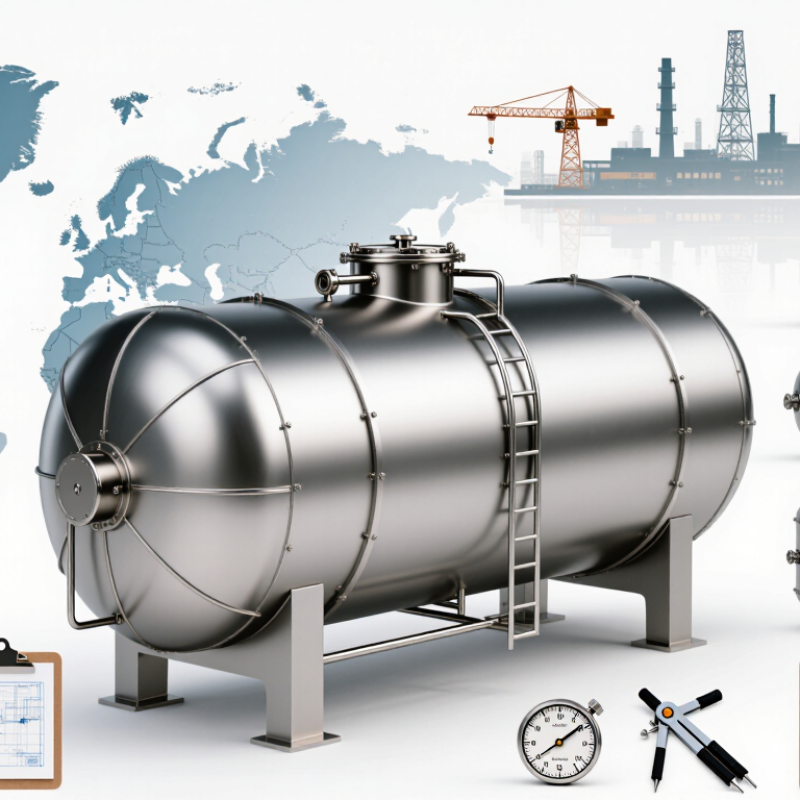
For global buyers, a tank’s nameplate capacity is only part of the specification. API 650 covers welded storage tanks operating at atmospheric pressure and modest internal pressure. API 620 addresses large welded tanks designed for low internal pressures, including certain refrigerated services. ASME Section VIII governs pressure vessels, where pressure, temperature, materials, and inspection requirements shape the design. These standards are not interchangeable. A wrong classification can affect shell thickness, roof design, testing, and documentation.
The scale of demand makes careful selection practical, not academic. The International Energy Agency’s Oil 2024 report estimated global oil demand at about 103 million barrels per day in 2024. That figure does not prescribe tank standards, but it shows why storage infrastructure must be specified for real operating conditions. Buyers should confirm the stored medium, design pressure, minimum design temperature, corrosion allowance, seismic loads, and applicable local requirements before comparing bids. Small details matter. A cold morning can change material requirements.
Ask fabricators to identify the governing code and provide traceable material records, qualified welding procedures, inspection plans, and test documentation. API 650 or API 620 construction may still require project-specific engineering; ASME Section VIII work also depends on the vessel’s design conditions and code edition. Review drawings, nozzle locations, access, and foundation interfaces with the operating team. A tidy quotation can hide a gap. I would also question assumptions that seem obvious, because site constraints often appear late. Use the current standard editions and verify requirements with the project engineer.
For global tank buyers, rated capacity is only a starting point. Ask for annual output, maximum vessel diameter, plate thickness, and documented delivery performance. A shop may promise large volumes yet lack space for final assembly or pressure testing. Check whether its stated capacity covers your tank’s actual dimensions, not just its total tonnage.
Material grades need traceable certificates, heat numbers, and clear records of forming and welding. The World Steel Association’s World Steel in Figures 2024 reports 1,892.2 million tonnes of crude steel production worldwide in 2023. That scale signals broad supply, but it does not prove a fabricator can source the grade your design requires. Verify certificates against the purchase specification. Small paperwork gaps matter.
Pressure ratings must match service conditions, design temperature, and the governing code. Request calculations, inspection records, and test procedures; ASME Boiler and Pressure Vessel Code requirements can provide a recognized design framework where specified. For tolerances, examine recent inspection reports for roundness, nozzle position, flange alignment, and weld distortion. Ask how measurements are taken and what happens when results fall outside limits. A polished brochure is not evidence. One practical caution: tighter tolerances can add cost and lead time, and not every application benefits from them.
| No. | Selection Metric | What to Verify | Relevant Standards or Reference | Buyer Evaluation Question |
|---|---|---|---|---|
| 1 | Fabrication capacity | Maximum tank diameter, length, weight, shop-floor handling limits, and annual production capacity. | Project-specific drawings and manufacturing plans | Can the fabricator handle the required dimensions, quantity, schedule, and shipping constraints? |
| 2 | Material grades | Confirm the exact grade, product form, thickness, and material traceability for shell, heads, nozzles, and supports. | Common references include ASTM A36 for structural carbon steel, ASTM A240 Type 304/316 for stainless plate, and ASTM A516 Grade 70 for pressure-vessel plate. | Are material certificates and heat-number traceability available for all pressure-retaining parts? |
| 3 | Pressure and vacuum rating | Check design pressure, design temperature, external pressure or vacuum, and applicable relief-protection requirements. | ASME BPVC Section VIII for applicable pressure vessels; API 650 for applicable welded storage tanks | Is the equipment designed and documented for the actual operating and upset conditions? |
| 4 | Dimensional tolerances | Review tolerances for diameter, roundness, straightness, thickness, nozzle location, and flange alignment. | Specified project drawings and the governing construction code | Are inspection methods and acceptance limits stated for each critical dimension? |
| 5 | Welding qualifications | Verify approved welding procedures, welder qualifications, filler-metal controls, and records for production welds. | ASME BPVC Section IX where applicable; other project or jurisdictional requirements may also apply. | Do the qualified procedures cover the specified materials, thicknesses, processes, and joint details? |
| 6 | Inspection and testing | Confirm examination methods, inspection extent, hold points, pressure or leak testing, and final documentation. | Applicable construction code, approved inspection and test plan, and purchaser specifications | Are acceptance criteria, witness points, and test records agreed before fabrication begins? |
| 7 | Corrosion protection | Assess internal lining, external coating, surface preparation, corrosion allowance, and compatibility with the stored contents. | Project coating specification; ISO 12944 is a reference for protective paint systems in atmospheric environments. | Is the proposed protection suitable for the service, exposure category, and maintenance plan? |
| 8 | Quality management and traceability | Review document control, inspection records, nonconformance handling, material traceability, and audit access. | ISO 9001 is a quality-management-system standard; certification does not replace product-code compliance. | Can the supplier provide a complete, auditable manufacturing record book? |
| 9 | Export logistics and delivery | Check transport dimensions, lifting points, preservation, packing, shipping documentation, and delivery terms. | Contract shipping terms and destination-country import requirements | Are route restrictions, packaging needs, delivery responsibilities, and export documents defined? |
| 10 | Compliance and documentation | Identify the required design code, inspection authority, certification route, language, and final deliverables. | Requirements depend on destination, intended service, and applicable local regulations; CE marking may apply to equipment within the scope of relevant EU legislation. | Has the compliance route been confirmed for the destination market before purchase? |
This is a buyer evaluation framework, not a ranking or verified capability claim for any specific fabricator. Applicable codes, material specifications, ratings, and tolerances must be confirmed for each project.
When comparing the 10 best tank fabricators, treat ISO 9001 certification as a starting point, not a guarantee. Request the current certificate and confirm its scope covers the facility and relevant fabrication activities. Then examine recent audit findings, corrective actions, and document-control practices. A polished certificate means little if inspection records are incomplete.
Ask how each company controls material traceability, welding procedures, non-destructive testing, and final inspections. Request a sample quality dossier with material certificates linked to identifiable tank components. Ask for proof. During a facility visit, compare documented procedures with shop-floor practice: are weld maps current, gauges calibrated, and hold points recorded? Small gaps matter. That comparison is not always neat, and one visit cannot reveal every weakness.
Review HSE records across several years, including injury rates, near misses, lost-time cases, and corrective actions. Numbers need context. Check whether reporting covers contractors and temporary workers, and whether trends reflect improved controls or simply different reporting habits. Ask for examples of toolbox talks, permit checks, emergency drills, and hazard closeouts. Compare written systems with worker interviews and site observations. A credible fabricator should explain setbacks plainly, show what changed, and support claims with dated, consistent records.
Global tank fabrication suppliers differ by more than price. Their strongest capabilities may serve water treatment, food processing, energy, or chemical plants, and those specialties are not interchangeable. A buyer should compare the tank materials, welding procedures, inspection records, and experience with the intended service. Ask for drawings and quality documents tied to a similar project. Details matter.
Delivery region changes the practical comparison. A fabricator near the installation site may simplify transport of oversized tanks, while a distant supplier may offer specialized engineering or shop capacity. Confirm shipping dimensions, site access, unloading needs, and who coordinates installation. A tank can meet its design requirements and still arrive with avoidable handling problems. That happens.
Certifications deserve careful review. Check whether the supplier’s documented quality system and product approvals match the project’s specification and destination. A certificate alone does not confirm that every tank, weld, or inspection meets the required scope. Request current records, clarify inspection hold points, and identify who signs off on testing. Also compare lead times using the same assumptions for design approval, fabrication, and delivery. Supplier schedules can sound precise, yet depend on material availability or late drawing changes. Buyers should test those assumptions before comparing quotes; I would not treat a tidy spreadsheet as proof of reliable execution.
An anonymized benchmark of ten global tank-fabrication supplier profiles, comparing commonly reported sector capabilities, delivery coverage, and certification readiness.
The figures represent the number of supplier profiles meeting each criterion. Certification categories refer to commonly used quality, pressure-equipment, storage-tank, and European conformity frameworks.
10 Best Tank Fabrication Companies for Global Buyers
A reliable tank fabricator should provide a clear welding compliance package. Ask which design and welding codes govern the project. Confirm the code edition, jurisdiction, and approved deviations. Request the Welding Procedure Specification and supporting Procedure Qualification Record. Welder qualification records should match the materials, thicknesses, positions, and processes used. Material certificates must trace plates, nozzles, flanges, and weld consumables to production records.
NDE details deserve careful review. Do not accept “100% tested” without definitions. Ask whether this means full visual inspection, radiography, ultrasonic testing, magnetic particle testing, or liquid penetrant testing. Check the sampling rate, weld categories, acceptance criteria, examiner qualifications, and report format. Independent inspection can verify weld maps, dimensional checks, pressure testing, coating thickness, and documentation. Small omissions matter.
Warranty language should state coverage, duration, exclusions, response times, and replacement responsibilities. Clarify whether transport, field labor, corrosion, leakage, and installation errors are included. Compare costs beyond the quotation. Include engineering, inspection, testing, packing, freight, duties, commissioning, and possible rework. In practice, the lowest bid may hide expensive documentation gaps. No checklist catches everything. I have seen technically strong tanks delayed by unclear handover records. A practical review should leave room for questions, corrections, and uncomfortable findings.