
China remains the world’s largest steelmaking base. The World Steel Association reported approximately 1.019 billion tonnes of crude steel production in China during 2023. That scale creates choice, but also confusion. Many suppliers list similar grades, thicknesses, and delivery promises. Their real differences often appear later, inside mill certificates, inspection records, and shipment packaging.
For this reason, identifying the best mild steel plate supplier requires more than comparing prices. Buyers should examine chemical composition, yield strength, dimensional tolerance, surface condition, and traceability. The OECD’s Steel Market Developments reports also highlight continuing pressure from global overcapacity and changing steel demand. A careful buyer should therefore verify production capability, not simply trust a polished catalogue. Small details matter. For example, plates should arrive with readable heat numbers, protected edges, and consistent thickness across the sheet.
Edwin Basson, Director General of the World Steel Association, has described steel as “an essential material for modern society.” His observation explains why supplier reliability matters beyond one transaction. A dependable Chinese supplier should support recognized standards, independent inspection, transparent testing, and stable export experience. Certifications help, but they are not the entire answer. No supplier is perfect. Some factories communicate quickly yet provide weak documentation; others offer strong quality but slower customization. This guide compares the practical signals behind supplier selection, including experience, technical control, delivery performance, and after-sales response. The final choice still requires judgment. Data narrows the risk, but real samples reveal the truth.
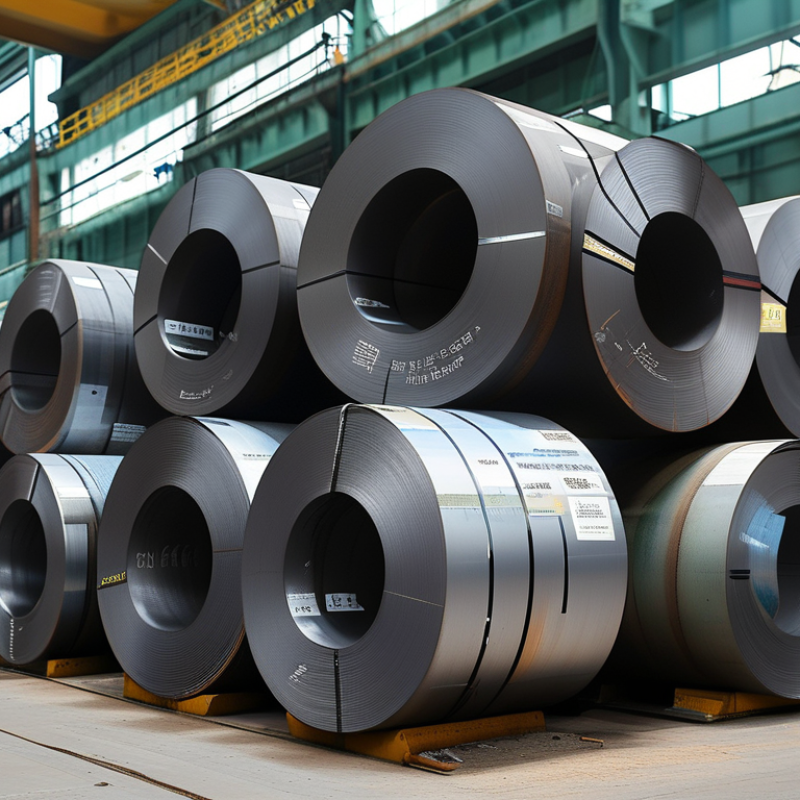
Mild steel plate is a flat carbon-steel product with relatively low carbon content. This composition makes it easier to cut, bend, weld, and form than higher-carbon steel. It usually offers practical strength without excessive hardness. However, it is not the strongest choice for every structure. Corrosion can also become a serious concern when the surface remains wet or exposed to chemicals.
In workshops, mild steel plate appears in base plates, brackets, tanks, machinery frames, trailers, and building components. A 6 mm plate may suit a fabricated support, while thicker sections can carry heavier loads. Actual performance depends on grade, thickness, welding quality, and design conditions. I have found that a plate’s smooth appearance proves very little. Mill certificates, dimensional checks, and surface inspections matter more. Small thickness variations can affect fitting and fabrication.
The best supplier should provide consistent chemical data, mechanical test results, accurate cutting, and traceable production records. Ask how the plates are stored and protected from moisture. Check whether the supplier can maintain flatness across larger sheets. Delivery reliability matters too. A low price may hide extra grinding, rework, or rejected pieces. Some buyers focus only on tensile strength, which is a mistake. Weldability, impact requirements, coating plans, and local service conditions deserve equal attention. In practice, supplier quality is judged by repeatable results, not polished promises.
A reliable mild steel plate supplier in China should prove consistency, not merely offer a low quotation. The World Steel Association reported that China produced about 1.005 billion tonnes of crude steel in 2024. This scale creates strong manufacturing capacity, but capacity alone does not guarantee dependable plate quality.
Ask for heat numbers, mill test certificates, and traceable inspection records. A serious supplier should match chemical results and mechanical properties with the requested standard, such as GB/T 700, ASTM A36, or EN 10025. Certificates should show yield strength, tensile strength, elongation, thickness tolerance, and impact results when required. Third-party inspection can verify ultrasonic testing, surface condition, plate dimensions, and loading photos before shipment.
Details matter.
Experience is visible in handling. Plates should arrive separated by grade, protected from standing water, and marked clearly on each bundle. Reliable suppliers also explain production lead times honestly and report problems before dispatch. The International Organization for Standardization states that ISO 9001 supports controlled, documented quality processes, yet certification is only evidence of a system. It is not proof that every plate is perfect. I have seen paperwork look complete while edge damage was overlooked. That uncomfortable gap deserves attention. Compare recent test reports, inspection procedures, and corrective-action records before choosing a long-term partner. A supplier willing to show weaknesses may be more trustworthy than one promising flawless performance.
| Evaluation Dimension | Reliable Supplier Benchmark | Relevant Technical Data | What Buyers Should Verify |
|---|---|---|---|
| Material Standards | Offers plates manufactured to recognized national or international standards. | Common specifications include ASTM A36, EN 10025-2 S235JR, and GB/T 700 Q235B. | The exact standard, grade, edition, and inspection level stated on the quotation and mill certificate. |
| Yield Strength | Provides mechanical properties that meet or exceed the selected standard. | Typical minimum values are approximately 235–250 MPa for common structural mild-steel grades, depending on grade and thickness. | Test results, plate thickness, specimen direction, and the applicable standard requirements. |
| Tensile Strength | Maintains consistent strength across the supplied batch. | Common ranges for structural mild-steel grades are approximately 360–550 MPa, depending on the specification. | Heat number, batch test report, tensile strength range, and elongation results. |
| Thickness Capability | Clearly defines standard production sizes and achievable custom dimensions. | Commercial mild-steel plates are commonly supplied in thicknesses from about 4 mm to more than 100 mm, subject to grade and mill capability. | Available thickness range, permitted thickness tolerance, and whether cut-to-size processing is available. |
| Flatness and Dimensions | Uses documented dimensional tolerances and performs final inspection before shipment. | Typical plate widths are approximately 1,500–3,000 mm, while lengths are often supplied around 6,000–12,000 mm, depending on the order. | Length, width, thickness, flatness, squareness, edge condition, and tolerance standard. |
| Surface Quality | Supplies plates free from defects that could affect fabrication or service performance. | Acceptable surface condition normally excludes harmful cracks, laminations, severe pitting, and excessive scale. | Surface inspection criteria, repair limits, photographs, and optional third-party inspection. |
| Traceability | Maintains traceability from raw material or heat number to the finished plate. | A complete material certificate should normally identify the grade, heat number, dimensions, chemical composition, and mechanical test results. | Matching heat numbers on plates, tags, packing lists, and inspection documents. |
| Chemical Composition | Controls carbon and alloying elements within the selected specification. | Typical mild-steel chemistry includes iron as the balance with controlled carbon, manganese, silicon, phosphorus, and sulfur. | Mill test certificate values and confirmation that they correspond to the ordered grade. |
| Testing and Inspection | Provides routine testing and supports independent inspection when required. | Common checks include chemical analysis, tensile testing, yield testing, elongation, dimensional inspection, and visual inspection. | Inspection plan, testing frequency, laboratory qualifications, and third-party inspection options. |
| Cutting and Processing | Offers accurate cutting without compromising the required plate dimensions or edge quality. | Available services may include flame cutting, plasma cutting, laser cutting, shot blasting, priming, and beveling. | Processing tolerance, edge condition, drawing review, and additional inspection after cutting. |
| Packaging and Export Documentation | Uses moisture-resistant, load-secure packaging and prepares complete shipping documents. | Typical documents may include commercial invoice, packing list, bill of lading, certificate of origin, and material certificate. | Packaging photographs, bundle weight, marking method, container loading plan, and document accuracy. |
| Delivery Reliability | Provides a written production and shipment schedule with clear communication about changes. | Indicative lead times are often about 15–45 days, depending on stock status, processing, quantity, and destination. | Confirmed production date, port schedule, trade terms, shipment tracking, and late-delivery procedures. |
Note: Technical values and lead times are typical market benchmarks only. Final requirements should always be confirmed against the applicable product standard, plate thickness, purchase order, and inspection certificate.
Choosing the best mild steel plate supplier in China requires more than comparing quotations. The World Steel Association reported that China produced 1,019.1 million tonnes of crude steel in 2023, roughly 54% of global output. This scale creates opportunities, but quality varies between mills, stockists, and trading companies.
Compare manufacturers through verifiable production evidence. Request mill test certificates showing chemical composition, yield strength, tensile strength, and elongation. Check whether each heat number matches the plate markings and packing list. A factory audit should review rolling equipment, furnace records, calibration labels, and surface-inspection procedures. Ask for dimensional tolerances, ultrasonic testing options, and the applicable standard, such as ASTM or EN requirements. OECD’s Steel Market Outlook highlights persistent overcapacity risks, so impressive capacity claims should not replace documented performance.
Delivery reliability deserves equal attention. Examine recent export records, monthly production capacity, average lead time, and port-loading procedures. Ask for photographs of edge protection and seaworthy packing. Third-party inspection can verify thickness, flatness, marking, and test certificates before shipment. However, inspection cannot repair poor process control. Price remains important, but a low offer may hide substitutions, delayed production, or incomplete testing. I would also compare three sample quotations line by line, because small wording differences can change grade, tolerance, and certification. No comparison is perfect. Even experienced buyers can overlook one unclear clause.
When choosing a mild steel plate supplier in China, buyers should examine quality standards before comparing prices. Common references include EN 10025, ASTM A36, and equivalent national standards. The correct standard depends on the plate’s intended use, thickness, and required strength. Do not accept “international standard” as a complete answer. Request the exact grade, chemical limits, mechanical properties, and delivery condition.
A reliable supplier should provide a traceable mill test certificate for each batch. Check the heat number, plate dimensions, yield strength, tensile strength, elongation, and impact test results. These details should match the markings on the plate and the purchase order. Third-party inspection can verify thickness, surface defects, flatness, and ultrasonic quality when internal flaws matter. Certificates may look professional, but mismatched data still occurs. Buyers should question unclear revisions, missing signatures, or repeated test values.
Tips: Ask for sample certificates before ordering. Confirm whether testing follows the stated standard. Measure several points, not only one corner. Keep inspection photographs and heat-number records. Also review the supplier’s quality system, calibration records, production experience, and response to nonconformities. ISO 9001 certification can support confidence, but it cannot replace product testing. A careful buyer should also consider a small trial order, because paperwork alone cannot reveal every manufacturing weakness.
This comparison shows the specified minimum yield strength for common mild and structural steel plate grades at thicknesses up to 16 mm. Buyers should also verify chemical composition, dimensional tolerances, impact-test requirements, surface condition, heat numbers, and independent mill test certificates before selecting a supplier.
The best supplier is not always the one offering the lowest quotation. Start by checking production experience, plate grades, thickness ranges, and export records. Ask for recent mill certificates and test reports. These documents should match the actual heat number on each plate.
A reliable supplier should explain its quality process clearly. Check chemical composition, tensile strength, yield strength, impact testing, and dimensional tolerances. For a bridge component, a two-millimeter deviation may create installation problems. Request photographs of plate markings, packing, and loading conditions. A factory audit, whether physical or remote, can reveal storage issues and weak traceability.
Communication matters more than many buyers expect. Confirm the applicable standard, inspection method, delivery schedule, and replacement procedure in writing. Ask whether an independent inspection can attend before shipment. I once focused too heavily on price and overlooked slow document approval. The delay affected fabrication. That mistake changed my supplier checklist.
Do not judge capacity from a polished website alone. Review sample orders, customer references, and production records where available. Compare payment terms carefully. A dependable partner will admit limitations instead of promising every specification. That honesty is useful. Suppliers should also protect plates from moisture during transport and provide practical packing details for your route.
