
Search

7 Tips for Buying a Dry Type Transformer Substation

Buying a Dry Type Transformer Substation is not a simple equipment purchase. It is a long-term decision involving safety, load stability, maintenance, noise, space, and operating costs. A substation may look compact on a specification sheet, yet its ventilation needs can affect an entire electrical room.

Power-transformer author John J. Winders Jr. wrote, “The transformer is the key component in the transmission and distribution of electric power.” That observation remains practical today. A dry type unit must match the site’s voltage, capacity, fault level, insulation class, and future demand. For example, a factory adding motor-driven conveyors may outgrow a transformer selected only for its present load.

Small details matter.

The following 7 Tips for Buying a Dry Type Transformer Substation examine the decisions that buyers often underestimate. They cover transformer sizing, enclosure protection, cooling arrangements, installation conditions, efficiency, certification, and supplier support. A reliable supplier should provide clear test reports, drawings, warranty terms, and maintenance guidance. Local electrical codes and utility requirements must also be confirmed by qualified professionals.

There is no perfect selection. A larger transformer may offer useful reserve capacity, but it can increase purchase cost and no-load losses. A quieter design may require different construction or additional expense. Buyers sometimes focus on price first, then discover that poor airflow causes overheating near the ceiling. That mistake is avoidable, although not always obvious. Careful comparison, site measurements, and independent technical review can turn a confusing purchase into a dependable power-system investment.
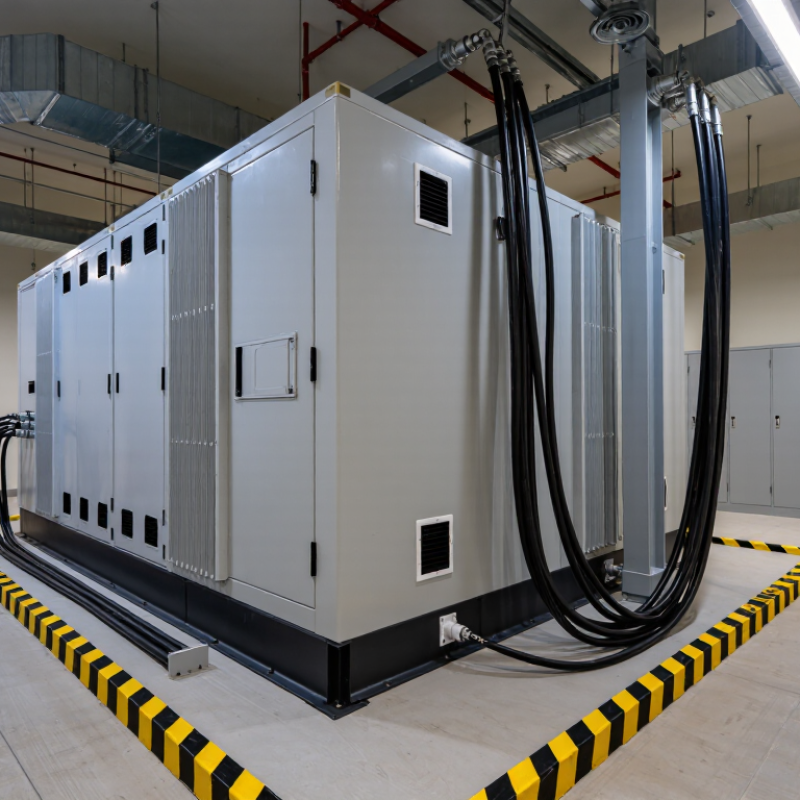
7 Tips for Buying a Dry Type Transformer Substation

Define Load, kVA, and 25% Spare Capacity for Correct Sizing

7 Tips for Buying a Dry Type Transformer Substation

Define Load, kVA, and 25% Spare Capacity for Correct Sizing

Choosing a dry type transformer substation starts with a dependable load assessment. Do not size it from the utility bill alone. Review motors, lighting, HVAC systems, control panels, and future equipment. I have seen projects fail because one large motor was ignored during early planning. Small omissions can create expensive problems.

List each load in watts or amperes, then identify its voltage and power factor. Convert the combined demand into kVA using actual operating conditions. Motors may draw heavy starting current, even when their running load looks modest. Check duty cycles, harmonics, and unbalanced phases. Ask an electrical engineer to verify the calculations. Field measurements are valuable, but temporary readings can miss seasonal peaks.

After calculating the expected demand, add 25% spare capacity. This allowance supports moderate expansion and reduces continuous transformer stress. For example, a calculated 400 kVA demand points toward a 500 kVA transformer. However, spare capacity is not a substitute for accurate engineering. Oversizing can increase cost, losses, and low-load inefficiency. That tradeoff needs review.

Leave physical space for cable bending, ventilation, inspection, and safe maintenance access. Confirm the enclosure rating and installation environment before ordering. Dust, moisture, altitude, and indoor heat can affect performance. I would also recheck the load schedule after the final equipment list arrives. Plans change. Suppliers should receive the verified kVA, voltage, frequency, grounding method, and required short-circuit rating.

Confirm IEC 60076-11 and IEEE C57.12.01 Compliance

Buying a dry type transformer substation requires more than comparing rated power and price. Confirm that the transformer is designed and tested under IEC 60076-11 and IEEE C57.12.01. These standards address construction, insulation, temperature rise, dielectric performance, and routine testing. Ask for the exact edition used. “Compliant” without evidence is too vague. Request a signed declaration, type-test references, and routine-test records for the offered unit. Tip 1: Match the standard to the application. IEC 60076-11 is central for dry-type transformers, while IEEE C57.12.01 may support projects using IEEE requirements. Dual compliance does not automatically cover every project specification.

Check the nameplate against the substation design. Verify voltage ratio, frequency, vector group, impedance, tap range, insulation level, enclosure rating, and cooling method. Confirm temperature-rise limits at the actual altitude and ambient temperature. A transformer passing factory tests can still fail in a poorly ventilated room. Request partial-discharge evidence when medium-voltage insulation reliability matters. Review clearances, cable termination space, earthing points, and fire-risk requirements with the responsible engineer. Tip 2: Inspect the test scope, not just the certificate. Look for winding resistance, ratio, polarity, applied-voltage, induced-voltage, and no-load loss results.

Have an independent engineer compare the documents with relevant IEC 60076-11 and IEEE C57.12.01 clauses. This check often finds small mismatches before delivery. I would also verify calibration records and corrective-action history. Suppliers can make documentation errors. Buyers can miss them too. Keep approved drawings and final test records in the maintenance file.

Compare Class F (155°C) and Class H (180°C) Insulation Ratings

7 Tips for Buying a Dry Type Transformer Substation

Compare Class F (155°C) and Class H (180°C) Insulation Ratings

When buying a dry type transformer substation, treat insulation class as a design decision, not a sales label. Class F insulation withstands 155°C, while Class H withstands 180°C under defined test conditions. These values describe the insulation system’s thermal capability. They do not mean the transformer should run continuously at those temperatures. Check the specified temperature rise, ambient temperature, altitude, and enclosure ventilation. A Class H unit can provide greater thermal margin, but it may cost more and still perform poorly in a crowded, dusty room.

Match the class to the real load profile. Motors, variable-speed drives, and harmonics can increase winding heating. Ask for routine test records, temperature-rise data, acoustic readings, and applicable standards. Review the manufacturer’s derating tables for high altitude or restricted airflow. Inspect cable access and maintenance space before ordering. Small layout mistakes can reduce cooling more than expected. Class F may suit a stable commercial load with good ventilation. Class H is often more suitable for heavy cycling, warmer environments, or future capacity increases.

Do not choose Class H automatically. Higher thermal endurance cannot repair incorrect protection settings, overloaded conductors, or blocked air paths. Compare total ownership cost, expected loading, replacement access, and monitoring options. Infrared inspection after commissioning can reveal uneven heating. This is where many purchase plans remain incomplete. Recheck assumptions. Local conditions may be harsher than the design spreadsheet suggests.

Choose IP23/IP31 Enclosures for 40°C Ambient Conditions

7 Tips for Buying a Dry Type Transformer Substation

Choose IP23 or IP31 enclosures carefully when the ambient temperature reaches 40°C. The enclosure affects ventilation, cooling, maintenance access, and moisture protection. IP23 protects against solid objects larger than 12.5 mm and angled water spray. It can suit clean indoor electrical rooms with controlled humidity. IP31 offers stronger protection against objects larger than 2.5 mm, but only against vertically dripping water. It is not waterproof.

Tip 1: Confirm the real site environment. Check dust, condensation, roof leaks, cleaning methods, and airflow around the transformer. A room that seems dry during inspection may become humid during seasonal changes. Do not select IP31 only because its rating sounds higher.

Tip 2: Verify the 40°C thermal design. Ask for the rated output, temperature-rise class, ventilation requirements, and any derating data. An enclosed transformer may run hotter than expected if air circulation is restricted. Keep the specified clearance around louvers and cable compartments. Small obstructions matter.

Tip 3: Match protection with heat removal. IP23 often provides better natural ventilation, while IP31 may need more careful airflow planning. However, the final choice depends on the complete enclosure design, not the IP code alone. This is easy to overlook. I have seen projects focus on ingress protection and undercheck heat accumulation.

Tip 4: Review testing and documentation. Request routine test reports, temperature-rise verification, enclosure drawings, and installation instructions. Confirm that the declared IP rating applies to the assembled substation, including doors, cable entries, and ventilation openings. A strong specification is useful, but site conditions still require professional review.

7 Tips for Buying a Dry Type Transformer Substation: Choose IP23/IP31 Enclosures for 40°C Ambient Conditions

IEC 60529 protection digits for two commonly considered dry type transformer enclosure options.

IP23 provides protection against solid objects larger than 12.5 mm and water sprayed at angles up to 60° from vertical. IP31 provides protection against solid objects larger than 2.5 mm and vertically dripping water. The IP code does not define the transformer’s thermal rating, so the enclosure and transformer should be verified for the required 40°C ambient design condition, ventilation, and site exposure.

Evaluate 4–6% Impedance, Noise, Losses, and Total Cost

7 Tips for Buying a Dry Type Transformer Substation

Evaluate 4–6% Impedance, Noise, Losses, and Total Cost

Buying a dry type transformer substation requires more than comparing nameplate capacity. Check the 4–6% impedance range against the planned fault level. Lower impedance may reduce voltage drop, but it can increase fault current. Ask for routine test records, not only catalog figures. Confirm whether the stated value includes tolerance and follows applicable electrical standards. A small mismatch can complicate parallel operation. I have seen two similar units share load poorly because their impedance differed. This detail is easy to miss.

Measure noise at the occupied boundary, not beside the enclosure. Ask for the test method and guaranteed sound level. A quiet substation protects offices, apartments, and maintenance staff from constant low-frequency irritation. Check no-load and load losses at the expected operating profile. A lower purchase price may create higher electricity costs over twenty years. Inspect ventilation paths, temperature sensors, and filter access. Dust changes real performance. It is not dramatic, but it matters.

Calculate total cost across purchase, transport, installation, testing, energy, servicing, and replacement. Include downtime risk and the cost of modifying the room later. Confirm clearances, cable entry, fire separation, and inspection requirements before ordering. Request warranty terms, spare-part availability, and service procedures. Compare at least three technically equivalent quotations. A spreadsheet can still mislead. My early estimates ignored crane access and lost installation hours. That mistake was expensive and preventable. Keep every operating assumption in the tender file.

7 Tips for Buying a Dry Type Transformer Substation - Evaluate 4–6% Impedance, Noise, Losses, and Total Cost

No. Buying Tip Recommended Evaluation Dimension Indicative Technical Data Why It Matters Buyer Verification
1 Confirm the Correct Rating Rated power, voltage ratio, frequency, and phase configuration Typical example: 1,000 kVA, 11 kV / 0.4 kV, 50 Hz, three-phase. Select capacity with approximately 15–25% spare capacity for expected load growth. Undersizing can cause overheating and premature aging, while excessive oversizing increases purchase cost and no-load energy consumption. Compare the calculated maximum demand, motor-starting current, harmonics, and future expansion plan with the proposed rating.
2 Evaluate 4–6% Impedance Percentage impedance, voltage regulation, and prospective short-circuit current Common design range: 4–6%. For a 1,000 kVA transformer at 400 V, approximate three-phase short-circuit current at the secondary terminals is:
4%: 36.1 kA   |   5%: 28.9 kA   |   6%: 24.1 kA
Lower impedance generally improves voltage regulation but increases fault current. Higher impedance reduces fault current but may produce greater voltage drop during heavy or motor loads. Check the electrical coordination study, switchgear interrupting rating, motor-starting requirements, and the guaranteed impedance tolerance.
3 Control Acoustic Noise Sound pressure level, installation distance, enclosure, and room acoustics Typical cast-resin dry-type range: 55–65 dB(A) at 1 m, depending on rating, core design, cooling method, and loading. Low-noise specifications may target approximately 55–58 dB(A). Noise can affect offices, residential areas, hospitals, and other occupied spaces. Room reverberation may make the actual perceived level higher than the factory value. Require a guaranteed test value, measurement distance, test condition, and applicable acoustic standard. Review ventilation and anti-vibration mounting.
4 Compare No-Load and Load Losses No-load loss, load loss, efficiency, and annual operating profile Illustrative 1,000 kVA comparison at rated conditions:
Standard efficiency: no-load loss 1.8 kW; load loss 11.0 kW
Low-loss design: no-load loss 1.3 kW; load loss 9.0 kW
No-load loss occurs whenever the transformer is energized. Load loss rises approximately with the square of the load, so both values affect lifetime energy cost. Request guaranteed losses at defined temperature and load conditions. Use the site load curve rather than comparing only nameplate efficiency.
5 Check Thermal Performance Insulation class, temperature rise, cooling method, altitude, and ambient temperature Common cast-resin insulation class: Class F, 155°C. Typical temperature-rise options may be 100 K or 80 K. Standard designs often assume an ambient temperature around 40°C and require derating above the specified altitude. Lower temperature rise can improve service life and overload capability but may increase size and initial cost. Poor ventilation can cause thermal derating. Confirm site altitude, maximum ambient temperature, ventilation airflow, enclosure protection, and overload profile before approving the design.
6 Verify Safety and Compliance Fire behavior, enclosure rating, routine tests, type tests, and applicable standards Specify non-liquid insulation, suitable indoor or outdoor enclosure, and documented tests for dielectric withstand, induced voltage, partial discharge where applicable, winding resistance, ratio, losses, and impedance. Dry-type units eliminate liquid leakage risk, but ventilation, clearances, arc-flash protection, and correct installation remain essential for safe operation. Identify the required IEC, IEEE, or local standards in the purchase specification and request signed test reports for the supplied unit.
7 Calculate Total Cost of Ownership Purchase price, installation, energy losses, maintenance, downtime, and disposal Example energy-loss calculation using 4,000 energized hours/year, average load factor of 50%, and electricity at $0.12/kWh:
Standard design: 1.8 + (11.0 × 0.5²) = 4.55 kW average loss; annual loss cost ≈ $2,184
Low-loss design: 1.3 + (9.0 × 0.5²) = 3.55 kW average loss; annual loss cost ≈ $1,704
The low-loss option saves approximately $480 per year under these assumptions. Actual savings depend on load profile, electricity tariff, operating hours, and purchase-price premium. Use a 10–20 year evaluation period and include capital cost, energy losses, maintenance, spare parts, installation, testing, and the financial impact of outages.
Note: The numerical values are representative engineering benchmarks for preliminary comparison only. Final guaranteed values must be confirmed in the project specification, design calculations, applicable standards, and the supplier’s certified test reports.